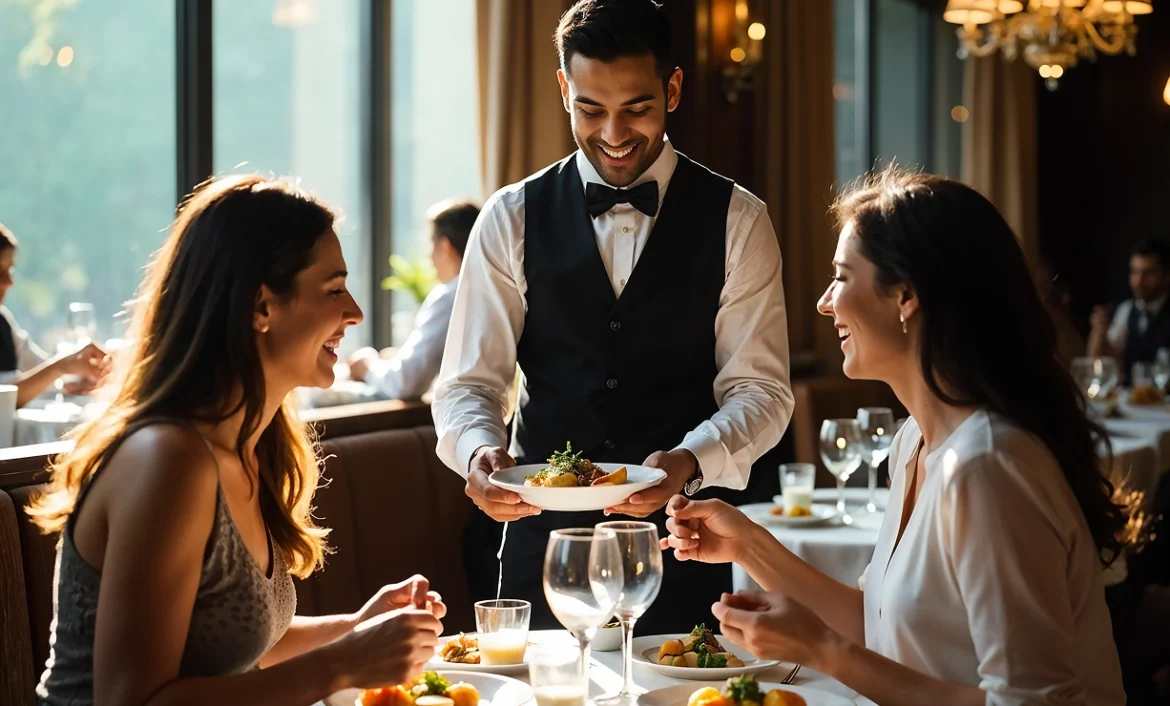








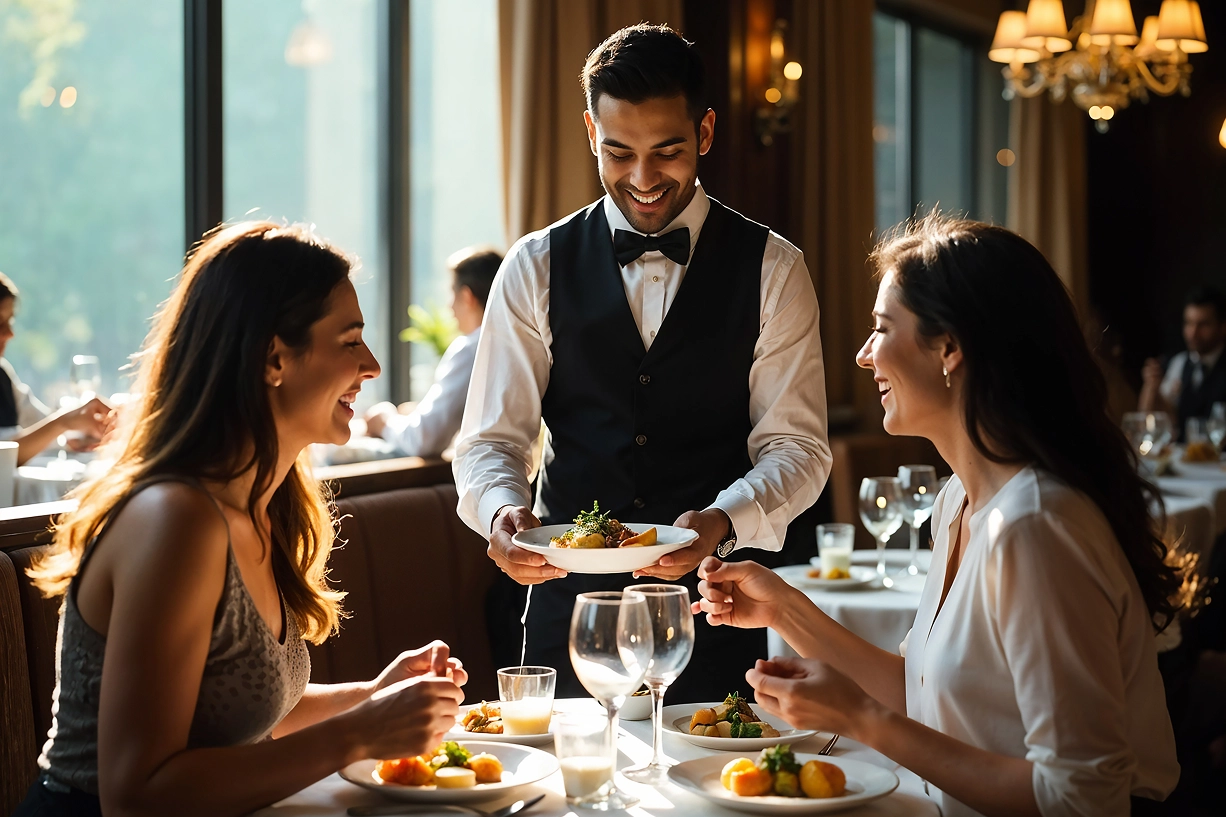
Is your hotel restaurant procurement strategy helping you compete for local diners or is it still built around overnight guests?
Hotel restaurants are no longer viewed as convenient dining options for overnight guests. Increasingly, they’re becoming destinations in their own right, attracting local residents alongside travelers and competing directly with independent restaurants across the street.
The numbers back it up. Recent research found that 50% of travelers now book hotels specifically because of their restaurant, while 92% of consumers have dined at a hotel restaurant without staying at the property. As hotel restaurants continue to build loyal local followings, success depends on much more than serving hotel guests.
That shift raises the stakes for every hotel F&B operation.
Winning over local diners means delivering the same quality, consistency, and experience they’d expect from any neighborhood favorite. While thoughtful design may encourage someone to walk through the door for the first time, keeping them coming back depends on what happens behind the scenes.
That’s where hotel restaurant procurement becomes a competitive advantage.
The Shift: From Hotel Amenity to Local Culinary Anchor
For years, hotel restaurants existed primarily to support occupancy. Their success was closely tied to room bookings, conferences, and travelers looking for a convenient meal after a long day.
Today, that’s changing.
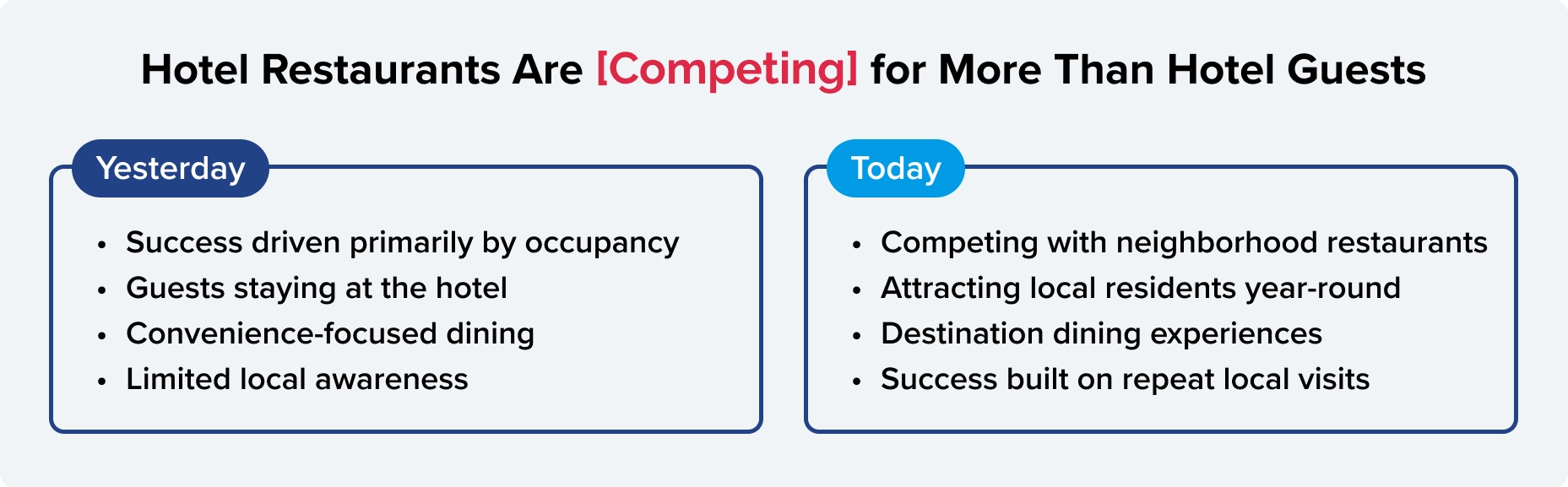
More hotel restaurants are positioning themselves as neighborhood gathering places, attracting local residents for everything from happy hour and weekend brunch to special occasions and business dinners. Instead of competing only with other hotels, they’re now competing with the best independent restaurants in their market.
Local diners don’t care whether your restaurant sits inside a hotel.
They care whether every visit delivers the same great food, service, and experience they can count on.
That changes how operators have to think about running the business. Every menu item, every supplier relationship, and every purchasing decision becomes part of the guest experience.
Why Design Wins the First Visit, but Operations Earns the Second
Hospitality designers have done an impressive job removing the psychological barriers that once kept locals from dining inside hotels. Street-level entrances, bar-forward layouts, inviting patios, and neighborhood-inspired interiors help these restaurants feel like destinations instead of hotel amenities.
Those design decisions matter.
They encourage someone to give your restaurant a try.
But design only wins the first visit.
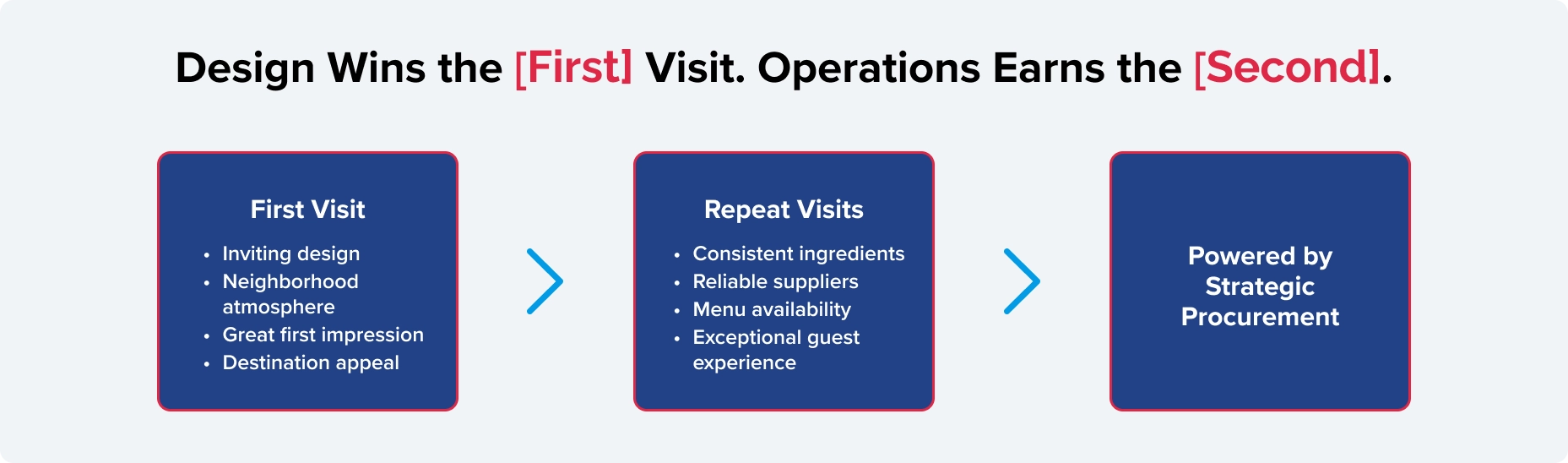
What happens when a guest returns for brunch and their favorite menu item isn’t available? Or when ingredient quality changes from one visit to the next? What if a Friday night delivery arrives late, forcing the kitchen to make last-minute substitutions?
For local diners, consistency matters just as much as creativity.
Unlike travelers who may only visit once, neighborhood guests compare every experience to the independent restaurants they visit every week. One disappointing meal can easily become the reason they don’t come back.
Interior design creates the promise.
Operations keep that promise.
And behind every reliable dining experience is a procurement strategy capable of delivering consistent ingredients, dependable suppliers, and the operational stability restaurants need to perform every day.
Building a “Local-Ready” Procurement Strategy
Creating a restaurant that locals choose again and again requires more than great recipes and talented chefs. It requires a hotel restaurant procurement strategy built to support consistency, creativity, and long-term profitability.
Rather than functioning as a simple ordering process, procurement becomes the operational engine that allows hotel restaurants to compete confidently with neighborhood favorites.
A local-ready procurement strategy should include several key components.
Strategic Sourcing
Competing with independent restaurants often means serving premium ingredients while still protecting margins.
Strategic sourcing gives operators access to high-quality products through negotiated supplier networks and purchasing programs, making it possible to elevate menus without absorbing the full cost of premium ingredients.
Instead of choosing between quality and profitability, operators can build menus that support both.
Regional & Local Sourcing
Local diners increasingly value restaurants that reflect the communities they’re part of.
Featuring regional produce, locally produced specialty items, or seasonal products can help create a stronger connection with guests while giving chefs opportunities to highlight what makes their market unique.
The challenge is maintaining consistency.
Regional suppliers may experience seasonal shortages, fluctuating pricing, or limited production capacity. A strong hotel restaurant procurement strategy helps operators balance local sourcing with broader supplier networks, ensuring chefs have the flexibility to feature local products without sacrificing availability, food quality, or cost control.
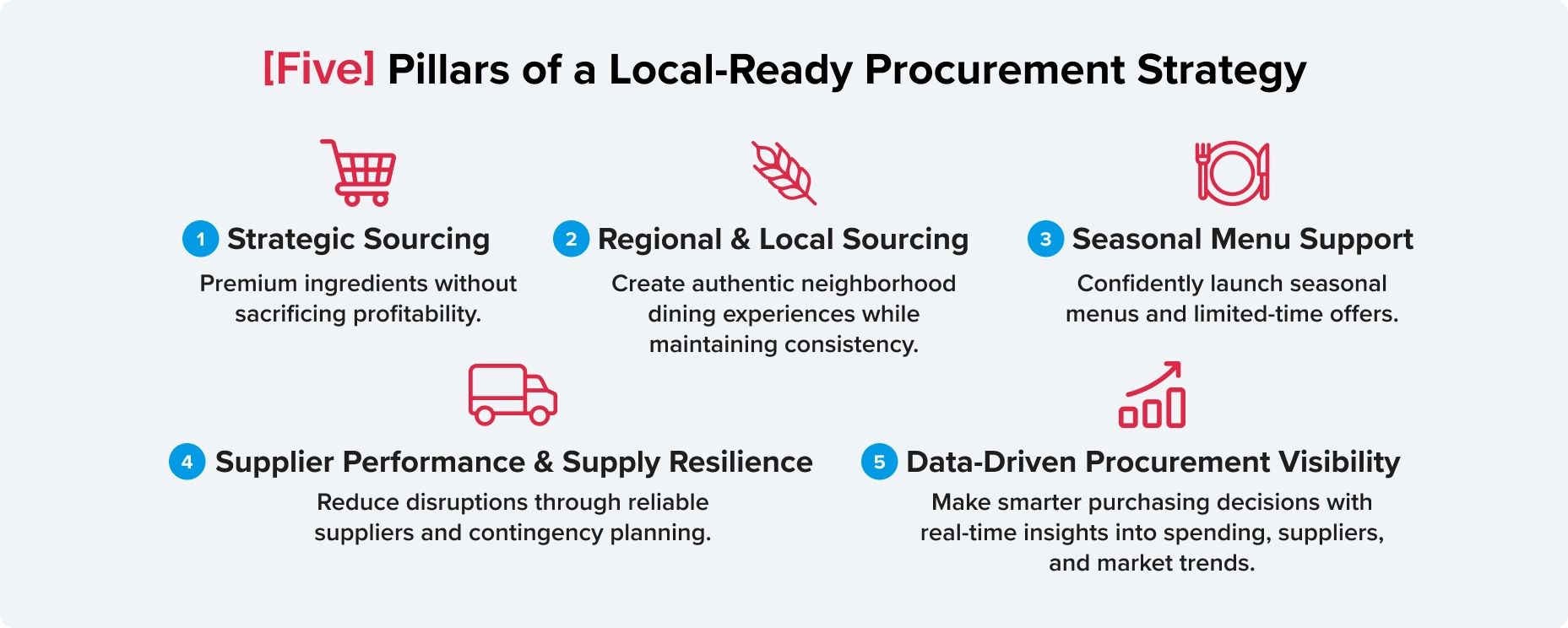
Seasonal Menus & Limited-Time Offers
Seasonal menus give guests a reason to come back.
Limited-time offers, chef features, and rotating seasonal ingredients create excitement while showcasing culinary creativity.
But those promotions only succeed when procurement can support them.
Without reliable sourcing, seasonal ingredients can become difficult to obtain, prices may spike unexpectedly, or quality may vary from delivery to delivery. Strong procurement planning helps secure supply, stabilize pricing where possible, and reduce the operational scramble that often comes with menu changes.
Instead of worrying about inventory, chefs can focus on creating memorable guest experiences.
Supplier Performance & Supply Resilience
Building a loyal neighborhood following depends on consistency.
That means having suppliers who deliver the right products, at the right quality, exactly when they’re needed.
But even the strongest supplier relationships benefit from contingency planning.
A resilient hotel restaurant procurement strategy includes supplier performance monitoring, backup sourcing options, and ongoing contract management so a delayed shipment or unexpected shortage doesn’t turn into an out-of-stock menu item during a busy weekend service.
Guests rarely know why something wasn’t available.
They simply remember that it wasn’t.
Data-Driven Procurement Visibility
Even the best procurement strategy needs visibility.
Food costs, commodity markets, supplier performance, and purchasing trends are constantly changing. Without real-time insight, operators are often reacting to problems instead of preventing them.
Data-driven hotel restaurant procurement allows hotel F&B teams to identify cost increases before they impact profitability, monitor supplier performance over time, uncover purchasing trends, and make more informed menu decisions.
That visibility becomes especially valuable when managing multiple outlets, seasonal menu changes, or complex purchasing across restaurants, bars, room service, and banquet operations.
The more proactive your purchasing decisions become, the easier it is to deliver a consistent guest experience while protecting margins.
How Source1 Helps Hotel Restaurants Compete Like Neighborhood Favorites
Creating a restaurant that locals choose over the competition takes more than exceptional design and talented chefs. It requires operational excellence that guests may never see—but notice every time they dine.
That’s where Source1 helps.
Source1 works alongside hospitality operators to simplify hotel restaurant procurement, strengthen supplier relationships, improve purchasing visibility, and build sourcing strategies that support long-term operational success.
Instead of spending valuable time managing supplier issues, negotiating contracts, or responding to unexpected shortages, hotel F&B teams can stay focused on delivering exceptional guest experiences.
With Source1, operators benefit from:
Strategic Purchasing Power
Access negotiated contracts and purchasing programs that help secure competitive pricing on the products your operation depends on—without sacrificing quality.
Smarter Supplier Management
Monitor supplier performance, strengthen vendor relationships, and build more resilient sourcing strategies that reduce disruptions before they impact service.
Flexible Regional Sourcing
Balance regional and local supplier relationships with broader purchasing networks, allowing your operation to showcase local flavors while maintaining consistency, availability, and cost control.
Greater Procurement Visibility
Access purchasing insights that help identify spending trends, evaluate supplier performance, and make faster, data-driven decisions across your operation.
More Time for Hospitality
Reducing procurement complexity allows culinary and operations teams to spend less time solving supply challenges and more time creating memorable guest experiences.
As hotel restaurants continue evolving into neighborhood destinations, procurement is no longer simply about ordering products.
It’s about creating the consistency, flexibility, and operational confidence needed to earn a guest’s second visit—and every visit after that.
Ready to strengthen the operational foundation behind your restaurant’s success? Click here to contact the Source1 team to learn how a strategic procurement approach can help your hotel restaurant compete with the very best in your market.
Frequently Asked Questions
How can hotel restaurants build a loyal following among local residents?
Attracting local diners starts with making the restaurant feel like a destination, not just another hotel amenity. But bringing guests through the door is only the beginning. Building loyalty requires consistently delivering the same quality food, reliable service, and memorable experience every time they visit. That level of consistency depends on strong operational execution behind the scenes, including procurement.
Why is procurement becoming more important for hotel restaurants?
As hotel restaurants compete directly with neighborhood dining establishments, guests expect the same consistency, menu quality, and value they receive from independent restaurants. Procurement plays a critical role by helping operators secure reliable suppliers, manage costs, maintain product quality, and reduce operational disruptions that can negatively impact the guest experience.
How does a modern procurement strategy support seasonal menus and limited-time offers?
Seasonal menus and limited-time offers create excitement and encourage repeat visits, but they also introduce sourcing challenges. A strategic procurement approach helps operators secure seasonal ingredients, stabilize pricing where possible, identify backup suppliers, and ensure promotions remain operationally sustainable from launch through completion.
How can hotel restaurants balance local sourcing with cost control?
Regional and locally sourced ingredients can strengthen a restaurant’s connection to the surrounding community while creating unique menu offerings. A strategic procurement strategy helps operators balance those regional partnerships with broader supplier networks, giving chefs access to local products without sacrificing purchasing efficiency, supply reliability, or profitability.
What role does supplier performance management play in the guest experience?
Guests may never meet your suppliers, but they experience the results of supplier performance every time they dine. Reliable deliveries, consistent product quality, and dependable inventory all contribute to a better guest experience. Monitoring supplier performance helps reduce shortages, late deliveries, and inconsistent products that can disrupt service.
How does procurement visibility improve decision-making for hotel F&B teams?
Real-time visibility into purchasing activity gives operators a clearer understanding of spending, supplier performance, commodity movement, and purchasing trends. With better information, hotel F&B leaders can identify opportunities to control costs, adjust purchasing strategies, support menu decisions, and address potential issues before they affect operations or guests.