




Hotel purchasing data could be the difference between AI that simply generates insights and AI that helps operators make smarter, more profitable decisions.
Artificial intelligence is quickly becoming part of the hospitality technology conversation. Hotels are exploring how AI can improve forecasting, automate routine work, uncover opportunities faster, and help teams make better decisions.
And operators appear ready for it.
According to Mews research reported by Hotel Management, 78% of hoteliers are optimistic about AI’s potential to improve hotel operations, while 83% say they completely or mostly trust AI-powered tools to support decision-making.
That interest comes at a time when hotels have plenty of reasons to look for better intelligence. Operating expenses continue to climb, travelers are watching discretionary spending more carefully, and occupancy growth remains relatively modest. Finding efficiencies without compromising the guest experience has become increasingly important.
But there is an important piece of the AI conversation that can get overlooked:
AI is only as useful as the data behind it.
For hotel food and beverage operations, that makes purchasing data especially important.
The Purchasing Data Challenge for Hotels
Think about the amount of purchasing information generated by a single hotel.
There are food and beverage purchases, operating supplies, multiple distributors, negotiated contracts, inventory levels, pricing changes, rebates, product substitutions, commodity fluctuations, and thousands of individual SKUs.
Now multiply that across an entire portfolio.
One property may purchase differently from another. Hotels may work with different suppliers based on geography. Contract utilization can vary by location. Pricing can change from one invoice to the next. Individual properties may even use different processes for tracking purchasing and inventory.
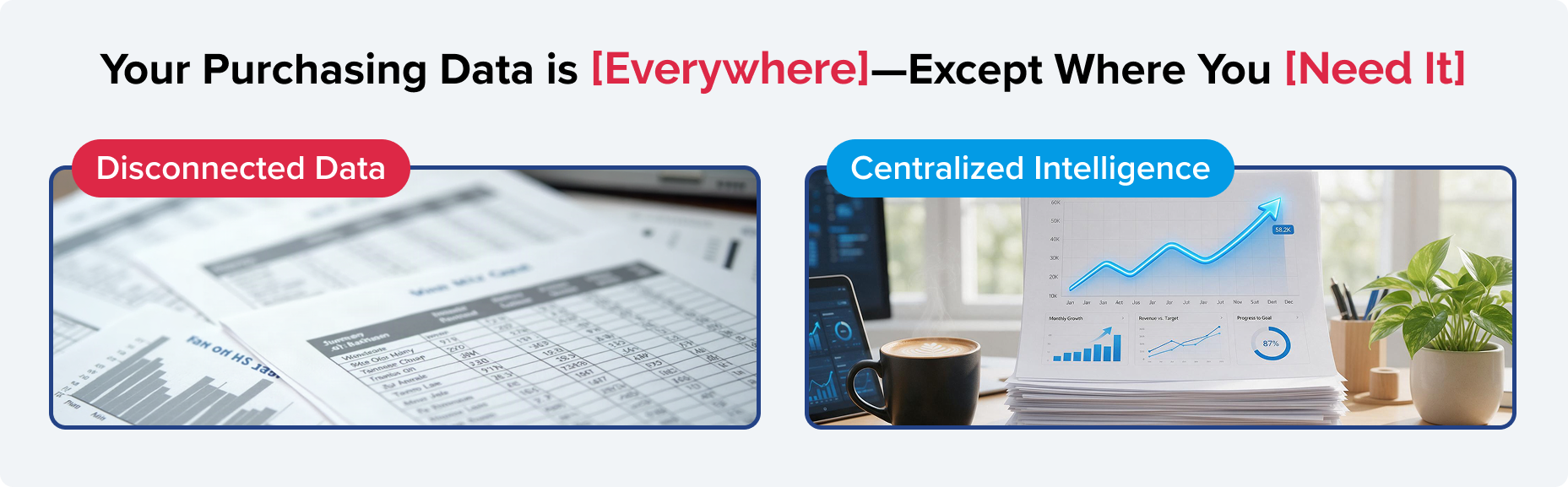
The information exists. The problem is often getting it into a form that makes it useful.
When purchasing data is scattered across spreadsheets, invoices, supplier portals, property-level reports, and disconnected systems, operators can spend more time assembling information than acting on it.
It also limits what more advanced analytics and AI can accomplish.
Why Better AI Starts with Better Hotel Purchasing Data
AI excels at identifying patterns across large amounts of information.
In hotel procurement, those patterns can reveal opportunities that would be difficult to uncover manually, especially across a large portfolio.
For example, purchasing intelligence can help operators answer questions such as:
- Are properties purchasing comparable products at different prices?
- Are hotels consistently buying outside negotiated contracts?
- Are there opportunities to consolidate purchases or use comparable products at a lower cost?
- Which categories are experiencing the greatest price movement?
- Where is purchasing behavior changing across the portfolio?
- Are individual properties following established purchasing strategies?
But useful answers depend on having accurate, connected information to analyze.
If purchasing activity from one property lives in a spreadsheet, another property relies on distributor reports, and contract information sits somewhere else entirely, the picture is incomplete.
Centralizing that information gives hotel operators something much more valuable than another dashboard. It creates a foundation for better purchasing intelligence.
From Purchasing Visibility to Actionable Intelligence
The first step isn’t necessarily asking AI to make more decisions.
It’s making sure hotel teams can clearly see what is happening across their purchasing operation.
With centralized purchasing data, operators can establish a more consistent view of spend across properties, suppliers, categories, and products. From there, analytics and AI can begin identifying patterns and exceptions that deserve attention.
Within the broader Buyers Edge Platform technology ecosystem available to Source1 customers, artificial intelligence and machine learning are already being applied alongside traditional analytics and automation.
One example is product optimization.
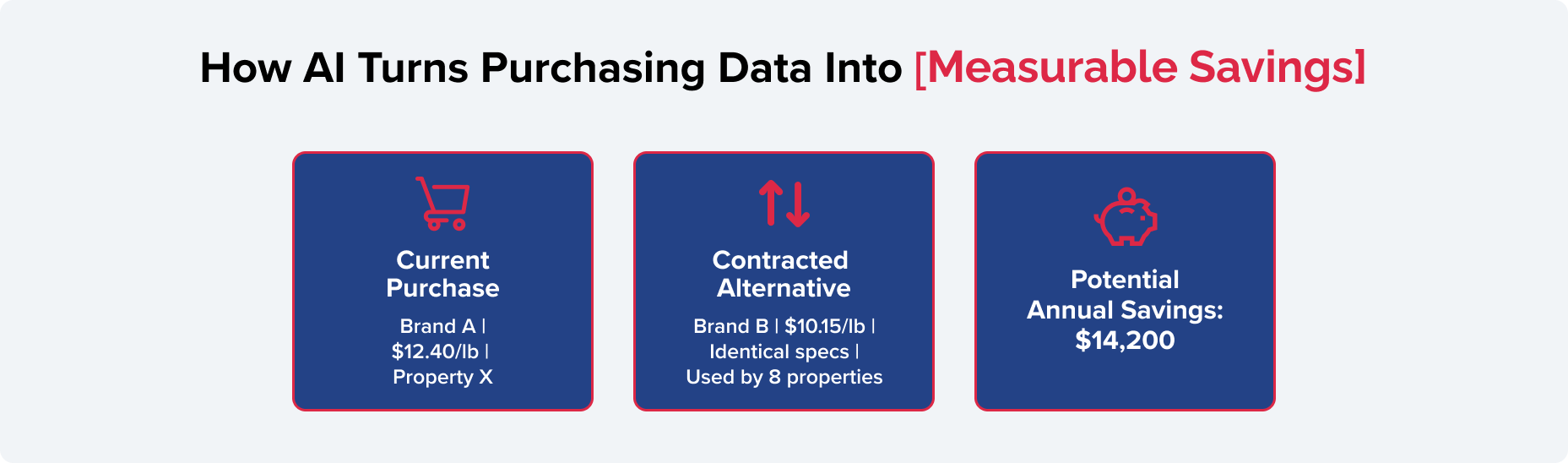
“AI-driven product optimization allows us to go beyond simply reporting what a customer purchased. By analyzing purchasing data, we can identify comparable or alternative products and uncover actionable savings opportunities within that purchasing behavior.”
Santiago Arango, Executive Leader, Source1
For hospitality operators, that could mean identifying a comparable product at a better cost, improving utilization of negotiated contracts, or flagging purchasing behavior that deserves a closer look.
Technology available through the Buyers Edge Platform ecosystem can also support areas including purchasing and spend analysis, commodity and demand forecasting, inventory visibility and planning, food-cost management, price and contract compliance, and the identification of savings opportunities across large volumes of purchasing data.
The goal isn’t more data.
It’s knowing what to do with it.
Why This Matters Even More for Multi-Property Hotel Groups
For a single property, manually reviewing purchasing activity may still be possible.
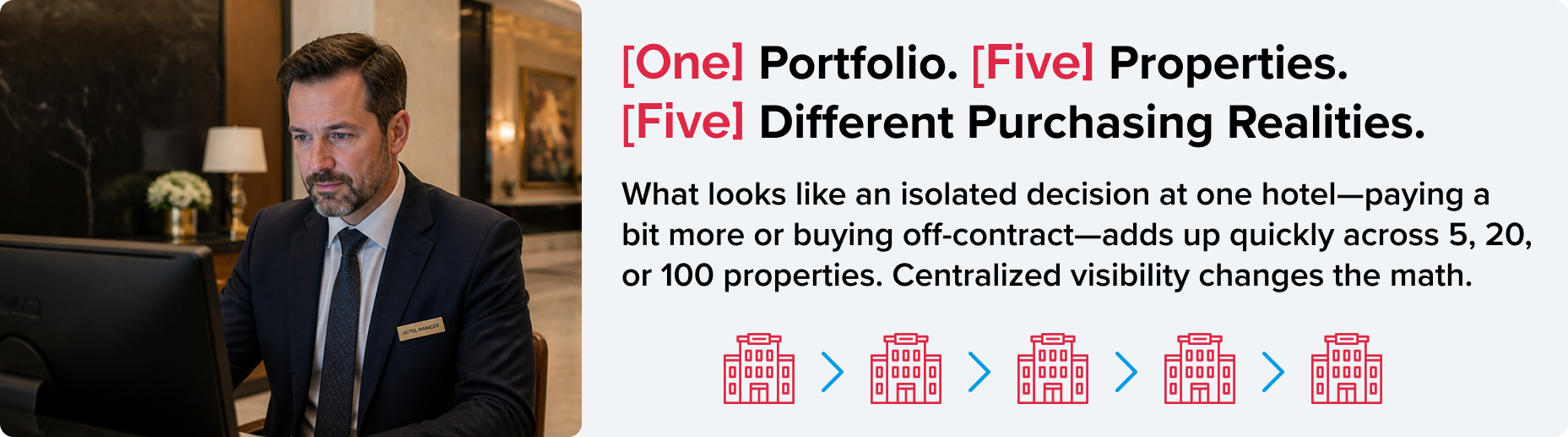
Across five, 20, or 100 properties, the challenge changes considerably.
One hotel might be buying a product that another property has already replaced with a more cost-effective alternative. One location may consistently purchase outside an established contract. Another may experience unusual price movement in a high-volume category.
Individually, those decisions can look insignificant.
Across a portfolio, they can add up.
Centralized purchasing visibility gives hospitality procurement teams the ability to look beyond individual transactions and understand how purchasing behavior differs across the organization.
That makes it easier to identify trends, investigate exceptions, and determine where action could have the greatest impact.
Northwood Hospitality: Seeing Purchasing Across the Portfolio
Northwood Hospitality is a great example of what stronger purchasing visibility can look like for a multi-property organization.
Northwood uses InsideTrack through Source1 to gain greater visibility into purchasing activity across its properties. Karim Lakhani of Northwood Hospitality has discussed how that visibility helps his team understand the buying habits of individual properties, make business decisions more quickly, and develop a more complete picture of purchasing across the organization.
Instead of relying solely on property-by-property analysis or manually assembled reports, the team can more easily see purchasing activity across the portfolio.
That visibility helps Northwood identify trends, recognize exceptions, and pivot when necessary.
And that is an important distinction in the AI conversation.
Before hospitality organizations can expect technology to uncover increasingly sophisticated opportunities, they need a reliable view of the information those technologies are analyzing.
AI Should Support Hotel Teams, Not Replace Their Judgment
There is another reason purchasing data matters: AI shouldn’t operate in a vacuum.
Hotel procurement involves variables that aren’t always captured by a recommendation alone. Product quality matters. Brand standards matter. Guest expectations matter. Supplier relationships, availability, regional differences, and operational realities matter.
The most valuable applications of AI aren’t necessarily those that make decisions for hotel teams.
They’re the ones that help teams recognize where a decision needs to be made.
AI can analyze thousands of transactions and flag an unusual purchasing pattern. It can identify a comparable product worth evaluating. It can surface price changes or contract-compliance issues that might otherwise go unnoticed.
The hospitality team still brings the context.
That combination of technology and human expertise can help operators move from reacting to purchasing problems after they happen to identifying opportunities earlier.
Preparing Hotel Purchasing Operations for What’s Next
Hotels don’t need to chase every new AI capability that enters the market.
A better starting point is understanding the data they already have.
Where does purchasing information live today? Can operators see purchasing activity across every property? Are contracts and pricing connected to actual buying behavior? Can teams easily identify exceptions? How quickly can they turn purchasing information into a decision?
Those questions matter whether a hotel organization is using advanced AI today or preparing to use more of it tomorrow.
Because the next phase of hospitality technology won’t simply be about who has access to AI.
It will be about who has the data infrastructure to make AI useful.
For hotel food and beverage teams, centralized purchasing data can create that foundation by transforming thousands of individual transactions into a clearer picture of what is happening across the operation.
And once you can see the whole picture, technology can do much more than tell you what you bought.
It can help you understand what to do next.
Turn Your Hotel Purchasing Data Into Better Decisions
Source1 combines hospitality procurement expertise with technology and purchasing intelligence available through the Buyers Edge Platform ecosystem to help hotel and resort operators gain greater visibility into their spend, identify savings opportunities, and make more informed purchasing decisions.