









If you ask most hospitality operators where the biggest costs are, the answer is usually food, labor, and maybe utilities on a tough month.
Fair.
But there’s another category that quietly chips away at your margins every single day, and it rarely gets the same attention.
Indirect spend in hospitality.
It’s not flashy. It doesn’t show up in one big number. But over time, it adds up in a way that can seriously impact profitability.
And the biggest challenge isn’t just the spend itself.
It’s the lack of visibility.
What is Indirect Spend in Hospitality?
Indirect spend in hospitality covers all the non-food purchases that keep your operation running.
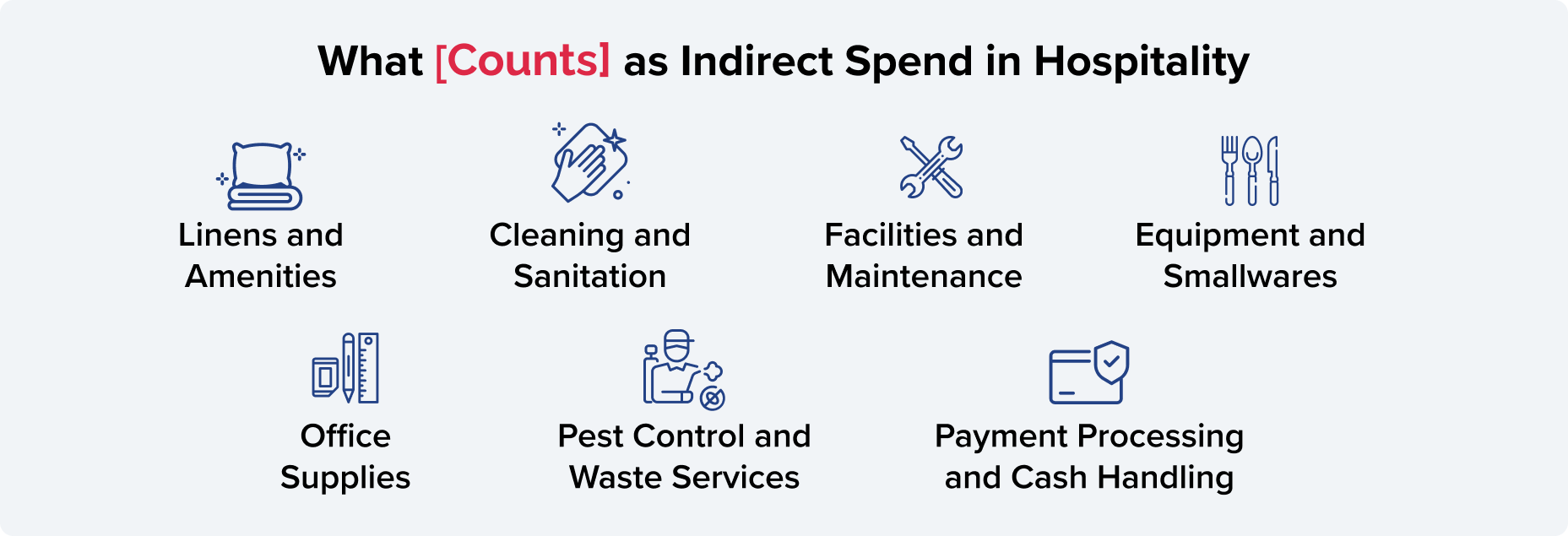
Think:
- Linens and guest amenities
- Cleaning supplies and sanitation programs
- Facilities maintenance and repairs
- Foodservice and catering equipment
- Office supplies and administrative services
- Pest control, waste management, and recycling
- Credit card processing and cash handling
None of these are optional. They are part of doing business.
But unlike food costs, which are usually tracked down to the ingredient, indirect spend in hospitality tends to live in the background.
Different teams manage it. Different vendors supply it. And most of the time, no one is looking at the full picture.
Why Indirect Spend is So Hard to Track
Let’s be honest. No one is ignoring indirect spend on purpose. It just gets messy fast.
Here’s why indirect spend in hospitality is so difficult to manage:
Too many vendors
Each department tends to have its own go-to suppliers. Housekeeping orders linens. Maintenance calls their preferred vendors. Finance handles service contracts. It works, but it creates fragmentation.
Inconsistent purchasing habits
Without clear contracts or guidance, teams often buy based on urgency or convenience. That can lead to price differences across locations or even within the same operation.
Limited visibility into data
Food purchases are tied to inventory and menu performance. Indirect spend in hospitality usually is not. That makes it harder to track trends or spot issues.
Manual processes everywhere
Invoices, approvals, and contracts are often handled in different systems or even offline. That slows everything down and makes it tough to connect the dots.
So it’s not that operators don’t care about indirect spend. It’s that they don’t have a clear way to see it.
Where Visibility Breaks Down
This is where things start to impact the bottom line.
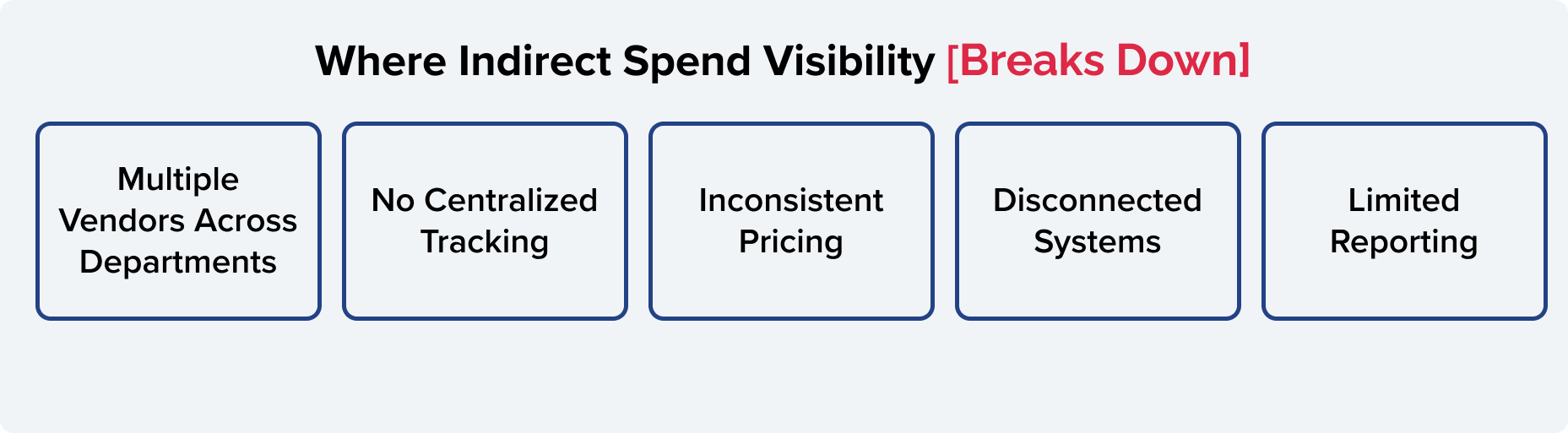
When you lack visibility into indirect spend in hospitality, simple questions become hard to answer:
- How much are we really spending across all indirect categories
- Are we getting consistent pricing across locations
- Where are we overspending or duplicating services
- Are we using the best suppliers available
- Are our contracts actually being followed
If you can’t answer those, you can’t control them.
And that’s where indirect spend shifts from “background noise” to a real business problem.
The True Cost of Poor Visibility
Indirect spend in hospitality doesn’t usually blow up your budget overnight. It builds slowly through small, everyday inefficiencies.
You might be:
- Paying more than you need to for routine services
- Missing out on negotiated pricing or rebates
- Working with too many vendors across locations
- Over-ordering supplies or not using them efficiently
- Spending hours chasing invoices instead of analyzing spend
None of these feel urgent in the moment.
But stack them together across multiple departments or locations, and suddenly you’re looking at real margin loss.
Especially in an industry where every percentage point matters.
Turning Indirect Spend Into A Strategic Advantage
Here’s the good news.
Indirect spend in hospitality doesn’t have to stay messy.
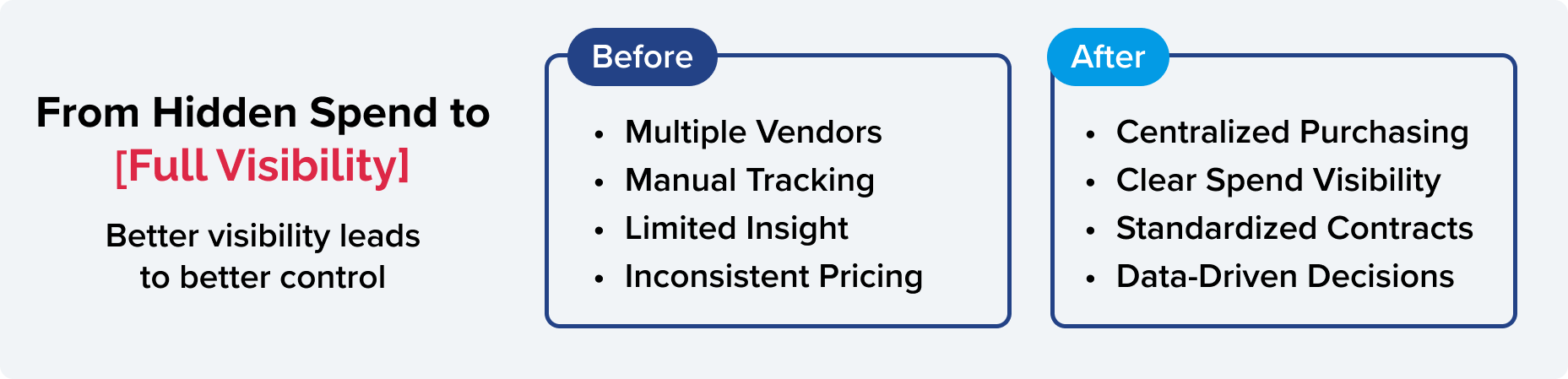
When you bring visibility into the picture, everything changes.
Operators who take a more structured approach can:
- See exactly where money is going across all indirect categories
- Standardize purchasing and supplier relationships
- Reduce vendor overlap and complexity
- Identify cost-saving opportunities quickly
- Make faster, more confident decisions
It stops being reactive.
It becomes strategic.
And once you have that level of clarity, it’s a lot easier to protect your margins.
How Source1 Helps Bring Visibility to Indirect Spend
This is where having the right partner matters.
Source1 helps operators take control of indirect spend in hospitality by combining a strong supplier network with hospitality procurement solutions built for visibility.
With access to more than 350 manufacturers and thousands of products and services, operators can consolidate purchasing across key indirect categories and tap into competitively negotiated programs.
From facilities and maintenance to linens, equipment, and Beyond Broadline services like office supplies, pest control, and payment processing, Source1 brings these areas into a more centralized approach.
More importantly, Source1 helps operators gain better visibility into indirect spend in hospitality.
Instead of managing purchases across disconnected vendors and systems, everything becomes easier to track, compare, and optimize. You can see where your money is going, identify gaps, and make smarter decisions without the guesswork.
Because once you can actually see your indirect spend clearly, you can finally control it.
And that’s where the real impact shows up on your bottom line.