







Contacts

1005 Lake Ave.
Lake Worth, FL 33460

marketing@source1purchasing.com

+1 800 777 1992

Reduce Costs and Improve Margins
Blog Posts

4 Ways to Instantly Reduce Costs and Improve Margins with Source1

Are you constantly seeking ways to streamline operations and maximize profits for your hotel?

At Source1, our experts understand the pressure hotel operators face in today’s industry, which is why we offer a comprehensive suite of solutions designed to empower your business and boost your bottom line.

Benefits of Reduced Costs and Improved Margins as a Hotel Operator:

Reducing costs and improving margins as a hotel operator offer several advantages:

Increased Profitability: By lowering expenses and increasing revenue per available room, you boost overall profitability.

Competitive Advantage: Improved margins allow you to offer competitive pricing while maintaining quality, attracting more guests and outperforming competitors.

Financial Stability: With higher margins, your hotel is better equipped to withstand economic fluctuations and industry challenges.

Investment Capacity: Greater profitability provides funds for investments in guest experience enhancements, property renovations, and technology upgrades, enhancing competitiveness and guest satisfaction.

Improved Efficiency: Cost reduction efforts often lead to streamlined operations and better resource management, resulting in increased efficiency throughout the hotel.

Enhanced Guest Experience: With more resources available, you can invest in amenities, services, and staff training, leading to an improved guest experience and higher satisfaction levels.

Sustainability: Cost-cutting measures often coincide with environmentally friendly practices, reducing waste and resource consumption, which aligns with the growing trend of eco-conscious travelers and promotes sustainability efforts.

Even though there are many benefits of reducing costs, there are also many challenges hospitality operators face when trying to identify areas to reduce costs.

These challenges include maintaining high quality standards, managing complex operations, analyzing detailed data, overcoming employee resistance, dealing with supply chain constraints, and addressing hidden costs.

Despite these obstacles, strategic cost management can lead to significant improvements in profitability, efficiency, and guest satisfaction.

How Source1 Can Help:

These are 4 ways you can instantly reduce costs and improve margins as a Source1 member:
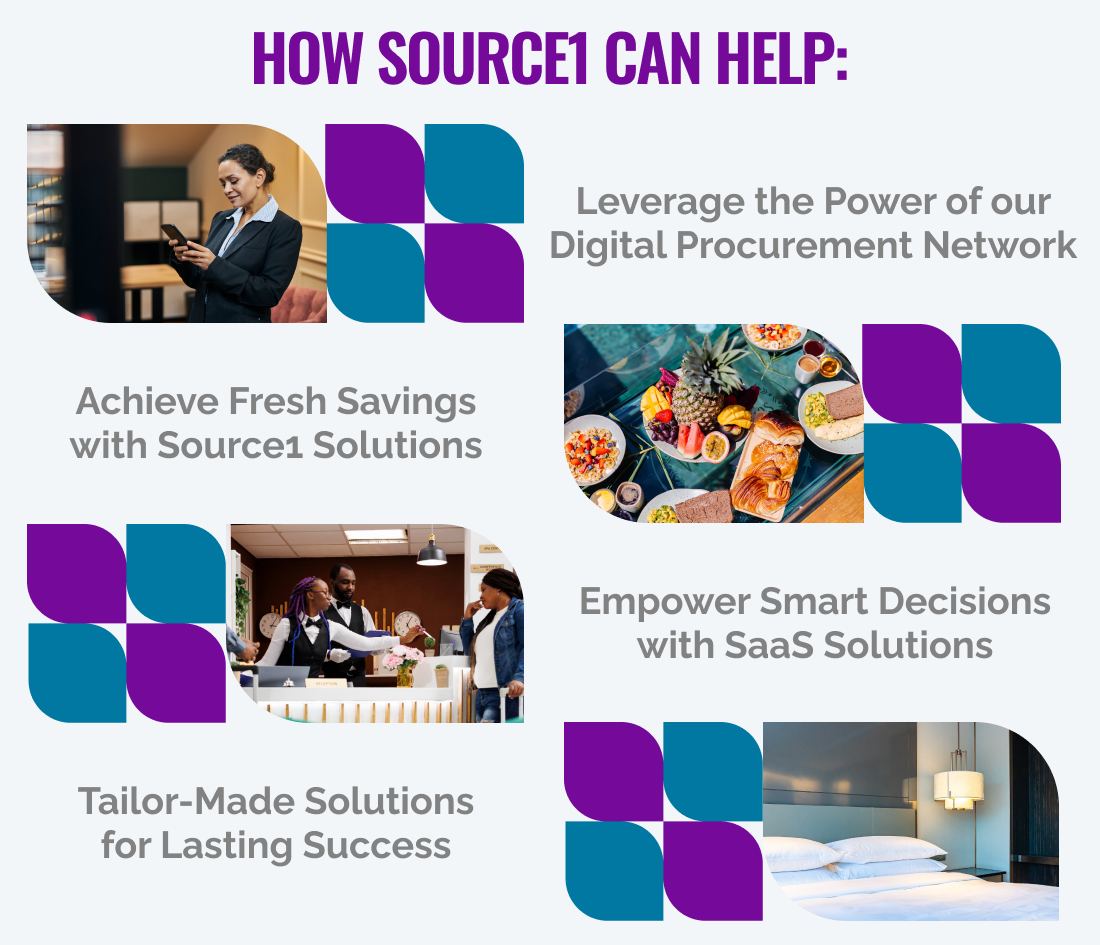
Infographic

1. Leverage the Power of our Digital Procurement Network:

Access Preferred Pricing: Our vast network of pre-vetted, high-quality suppliers allows you to tap into exclusive discounts and competitive pricing.

Cash Back Savings: Take advantage of our cashback programs on qualifying purchases. These programs put real money back in your pocket, further enhancing your margins.

Trusted Network of Top Suppliers: Source1 connects you with a reliable network of top-quality, popular brands of suppliers, ensuring consistent quality and product availability.

2. Achieve Fresh Savings with Source1 Solutions:

Optimize Produce Contracting: Our expertise in produce contracting helps you secure the best prices for fresh ingredients. We understand market fluctuations and leverage our buying power to negotiate favorable terms.

Embrace Local Sourcing: Shorten your supply chain and reduce transportation costs by sourcing locally whenever possible. Source1 can help you identify and connect with qualified local vendors.

Prioritize Food Safety: Our commitment to food safety gives you peace of mind. We ensure suppliers adhere to strict quality standards, minimizing risks and potential disruptions.

3. Empower Smart Decisions with SaaS Solutions:

Gain Visibility into Spend Management: Our intuitive SaaS platform provides real-time insights into your spending habits. Identify areas for improvement and make data-driven decisions to optimize your budget.

Streamline Back-Office Processes: Automate manual tasks like purchase orders, invoicing, and reporting. This frees up valuable time and resources for your team to focus on core business activities.

Unlock Data-Driven Supply Chain Insights: Gain valuable data and analytics to identify trends, optimize inventory management, and make strategic purchasing decisions.

4. Tailor-Made Solutions for Lasting Success:

Custom Contracts: Our team of experts can work with you to develop customized contracts that align with your specific needs and procurement goals.

Full-Service Procurement: Outsource your entire procurement process to Source1. We handle everything from supplier negotiation to contract management, allowing you to focus on what matters most – running your hotel.

Assurance of Supply: Never worry about the quality and timing of your supply again. Source1 guarantees a consistent supply of essential goods and ingredients, ensuring your business continuity.

Join Source1 Today

At Source1, we understand the complexities of running a hotel operation. Our comprehensive suite of solutions help cater to every area of your business.

Whether you need savings on items you’re purchasing every day and access to competitive produce pricing or streamlined back office and supply chain management. By joining  Source1, you can instantly reduce costs and improve margins at your hotel.

How Data-Driven Procurement Transforms Hospitality
ArticlesBlog PostsProcurement Services CompaniesTech

How Data-Driven Procurement Transforms Hospitality

Did you know? Technological advancements have triggered an uncontrollable shift, reshaping the landscape of hospitality operations.

One area affected by this transformation is procurement – where old-school practices are giving way to innovative, data-driven approaches.

Let’s explore these rapid transformations in the hospitality industry along with the significance of data-driven procurement while we shed light on the challenges faced by traditional methods.

The Evolution of Automated Procurement

Historical Manual Processes: Traditionally, procurement in the hospitality sector relied heavily on manual processes, involving extensive paperwork, phone calls, and countless hours dedicated to negotiations.

This complex approach, while familiar, proved increasingly inadequate in meeting the demands of a rapidly evolving industry.

Emergence of Automated Systems: The arrival of technology sparked a big change in how we purchase things, leading to the creation of automated systems.

These systems streamline the entire procurement lifecycle, from order placement to inventory management. The integration of technology not only accelerates these processes but also reduces errors and enhances overall efficiency.

The Power of Data-Driven Insights

Value of Data-Driven Procurement: Today, data is the cornerstone of informed decision-making. In the hospitality industry, leveraging data-driven insights is a game-changer.

Analytics play a pivotal role in identifying trends, optimizing inventory levels, and predicting customer demand. This change from relying on instincts to using data for decisions is a big shift that transforms how we do procurement.

Role of Analytics: Analytics not only provide a retrospective view of operations but also offer predictive capabilities.

With access to comprehensive data, hotel and hospitality operators can anticipate market trends, align their inventory with customer preferences, and proactively respond to changes in demand.
Being able to predict things ahead of time is now a valuable advantage in an industry that’s always changing.

Streamlining Supply Chain Management

Complexities of Supply Chain Management: Supply chain management in the hospitality industry is inherently complex, involving multiple stakeholders, perishable goods, and ever-changing market dynamics.

Traditional procurement methods struggle to efficiently navigate these intricacies, leading to delays, inefficiencies, and missed opportunities.

Data and Technology’s Role: Enter data and technology – the dynamic duo simplifying supply chain complexities.

With real-time insights into inventory levels, supplier performance, and market trends, procurement processes become more agile and responsive. This, in turn, allows operators with reducing costs and waste, and improving overall operational efficiency.

Source1's Contribution

With these transformations, Source1 becomes an important game-player, providing specific solutions designed for the unique challenges faced when procuring items for your operation. We’re dedicated to making the process of getting supplies simpler, fitting well with what the industry needs as it changes.

Our technology and insights from data helps you stay ahead in a quick and competitive setting. As we navigate the transformative landscape of hospitality procurement, embracing these solutions and making data-driven decisions becomes not just a choice but a necessity.

Source1 acts as a guiding force, underlining the significance of staying ahead with innovative ideas. This ensures that hotel and hospitality operators are prepared for success in the future.

Efficiency Without Exhaustion: How to Prevent Burnout at Your Hotel
ArticlesBlog Posts

Efficiency Without Exhaustion: How to Prevent Burnout at Your Hotel

Productivity is a key driver for success in every industry, especially hospitality.

As a hotel operator, maintaining high levels of productivity among your staff is essential for providing excellent guest experiences.

However, the demanding nature of the industry can sometimes lead to employee burnout.

Let’s explore strategies to enhance productivity while safeguarding against burnout in your hotel and how Source1 can help you achieve it.


  1. Foster a Positive Work Environment:

To foster a positive work environment in the hotel industry, prioritize effective communication between management and staff, encouraging open dialogue and feedback.

Promote teamwork through team-building activities and regular meetings, cultivating a sense of camaraderie. Recognize and reward employees for their efforts, whether through verbal praise, employee of the month programs, or performance bonuses.

Provide opportunities for professional development and training to support career growth. Prioritize work-life balance by implementing reasonable schedules and flexibility when possible.

Lead by example, exhibiting a positive attitude and approachability. By incorporating these elements, hotels can create a workplace where employees feel valued and motivated, contributing to a positive and thriving work environment.


  1. Implement Efficient Training Programs:

Efficient training programs in the hotel industry are pivotal for ensuring a skilled and motivated workforce. To implement these programs effectively, start with a comprehensive needs assessment to identify specific areas for improvement.

Design training modules that are tailored to the unique demands of the hospitality sector, incorporating practical and interactive elements. Utilize a variety of training methods, such as hands-on workshops, e-learning platforms, and on-the-job mentoring, to accommodate diverse learning preferences.

Ensure the content remains current by regularly updating training materials to align with industry trends and evolving guest expectations. Continuous monitoring and evaluation of the training programs, along with feedback from participants, allow for necessary adjustments, ensuring that the training remains impactful and relevant.

By committing to efficient and targeted training initiatives, hotels can cultivate a skilled and adaptable staff, ultimately enhancing the guest experience and the overall success of the establishment.


  1. Streamline Processes and Embrace Technology:

Evaluate your hotel’s operational processes and identify areas for improvement. Embrace Source1 technology that streamlines tasks, such as inventory management, spend management, contract utilization, and product optimization.

You can optimize your inventory process with our automated technology for more accurate forecasting and effective ordering and use AI-Driven procurement software that recommends opportunities for new savings.

Our spend management technology provides real-time visibility into your purchasing, providing actionable data on how your spending impacts profitability. With contract utilization, you can ensure you’re paying the correct prices, make corrections, and maximize the value of all your negotiated contracts.

When taking advantage of technology, you not only save time but also reduce the likelihood of repetitive and monotonous work that can contribute to burnout.


  1. Prioritize Work-Life Balance:

Prioritizing work-life balance in the hotel industry is essential for fostering a healthy and motivated workforce. Establishing reasonable work schedules, providing flexible arrangements when possible, and ensuring fair distribution of workload contribute to a more balanced professional life for hotel employees.

Encourage employees to take breaks and use their vacation time, emphasizing the importance of rest and rejuvenation. Implement policies that discourage excessive overtime and promote a culture that values the well-being of staff.

By recognizing and supporting the need for work-life balance, hotels can enhance employee satisfaction, reduce burnout, and ultimately contribute to a more productive and positive working environment in the hospitality sector.


  1. Offer Professional Development Opportunities:

In the hospitality industry, offering professional development opportunities is instrumental in nurturing a skilled and motivated workforce. Establish a framework for continuous learning by providing employees with access to workshops, seminars, and industry conferences.

Implement cross-training programs to broaden skill sets and encourage career growth within the organization. Foster mentorship relationships and support educational pursuits, such as certification programs or degree courses related to the hospitality field. This not only enhances employee satisfaction but also contributes to a more skilled and versatile team.

Another way to show professionalism at your restaurant is by encouraging your staff to wear uniforms. Uniforms play an important role in the success of your business. They create brand consistency, boost confidence, and show a sense of equality.

By investing in the professional growth of staff, hotels not only enhance the capabilities of their team but also bolster employee morale and loyalty, ultimately contributing to the overall success of the establishment.


  1. Recognize and Reward Achievements:

In the hotel industry, recognizing and rewarding employee achievements is a key strategy for fostering a positive and motivated workforce. Implement a structured recognition program that acknowledges outstanding performance, whether it’s exceptional customer service, innovative problem-solving, or exceeding targets.

Consider a variety of rewards, such as employee of the month recognition, performance bonuses, or tangible incentives like gift cards or extra time off. Publicly celebrate achievements during team meetings or through internal communication channels to highlight the value placed on individual contributions.

This not only boosts morale but also encourages a culture of excellence and dedication among hotel staff, ultimately contributing to enhanced guest satisfaction and overall success in the hospitality sector.


  1. Create a Supportive Team Culture:

Creating a supportive team culture is pivotal in the hotel industry to foster collaboration and elevate overall employee satisfaction. Encourage open communication and camaraderie through team-building activities, regular meetings, and shared goals.

Emphasize the importance of mutual respect and appreciation for diverse roles within the team. Provide opportunities for professional growth and skill-sharing, fostering an environment where team members can learn from each other. Recognize and celebrate team achievements, reinforcing a sense of unity and shared success.

Establish a supportive leadership approach, where managers actively listen to employee concerns and provide guidance. By nurturing a positive team culture, hotels not only enhance internal dynamics but also contribute to a cohesive and motivated staff, ultimately elevating the quality of service and guest experience.


  1. Conduct Regular Check-Ins:

At your hotel operation, conducting regular check-ins with employees is essential to prevent burnout and promote overall well-being. Implement a structured system of one-on-one meetings between managers and staff to discuss workloads, challenges, and individual goals.

During these check-ins, create a space for open communication, allowing employees to express concerns or seek guidance on managing stress. Recognize and appreciate their efforts, reinforcing a positive work environment. Actively monitor workload and ensure a fair distribution of tasks to prevent excessive stress.

By regularly checking in with employees, hotels not only demonstrate a commitment to their staff’s mental health but also proactively address potential burnout, fostering a workplace culture that values and supports the overall well-being of its team.


Productivity Wins the Race

Prioritizing productivity while preventing employee burnout requires a holistic approach that considers the well-being of your staff.

By fostering a positive work environment, providing ongoing training and development, and implementing supportive policies, you can create a hotel team that is not only highly productive but also resilient in the face of challenges.

Remember, a happy and motivated staff is the key to delivering exceptional guest experiences and ensuring the long-term success of your hotel. And with the help of Source1, you can hit the mark in all areas of your operation.
source1 purchasing featured image 3
ArticlesBlog Posts

Cross-Contact vs. Cross-Contamination: Clearing Up Confusion

There are many people who have food allergies that range from sensitivity to life-threatening, which is why hotel food safety is so important.

While it can be fairly easy for people with food allergies to make necessary adjustments when they are at home, traveling can bring a number of difficult issues to the forefront.

Hotel dining presents a unique set of challenges when it comes to ensuring the safety and well-being of guests with dietary restrictions. 

In this blog, we’ll walk you through the critical topic of food safety at hotel restaurants. We’ll explore the best practices for preventing cross-contamination and cross-contact, how you can accommodate dietary needs and provide a worry-free dining experience for travelers with food allergies and sensitivities.

Differences Between Cross-Contact and Cross-Contamination

Cross-contact and cross-contamination are both food safety concerns, but they have distinct differences:

Cross-contact is primarily a concern for individuals with food allergies or intolerances. It involves the transfer of allergenic proteins from one food to another, causing an adverse reaction in sensitive individuals. This can happen when a surface, utensil, or equipment previously in contact with an allergen is used without proper cleaning to prepare other foods.

Cross-contamination occurs when harmful microorganisms, such as bacteria, are transferred from one contaminated surface or food to another, potentially leading to foodborne illnesses. This can happen through direct contact, like using the same cutting board for raw meat and vegetables, or indirect contact, such as through contaminated utensils or hands.

Examples of Cross-Contact (Food Allergens)

  1. Peanut Allergy: Using a knife to spread peanut butter on bread and then using the same knife to spread regular butter on a different piece of bread, potentially leaving peanut residue on the butter. This could be harmful to someone with a peanut allergy.
  2. Gluten Sensitivity: Toasting regular bread in a toaster and then toasting gluten-free bread in the same toaster without cleaning the crumbs, leading to gluten cross-contact for someone with celiac disease.
  3. Shellfish Allergy: Grilling shrimp on a barbecue and then grilling vegetables on the same grill without proper cleaning, potentially transferring shellfish proteins to the vegetables.
  4. Nut Allergy: Chopping nuts on a cutting board and then using the same board and knife to cut vegetables without thorough cleaning, resulting in nut residue on the vegetables.

Examples of Cross-Contamination (Pathogens)

  1. Raw Meat and Vegetables: Chopping raw chicken on a cutting board and then cutting vegetables on the same surface without washing it, potentially transferring harmful bacteria like Salmonella to the vegetables.
  2. Hand Contamination: Touching raw eggs and then handling ready-to-eat foods, such as a sandwich, without proper handwashing can spread pathogens like E. coli.
  3. Sponge or Dishcloth: Using a sponge or dishcloth that has been in contact with raw meat juices to wipe down kitchen surfaces, which can transfer bacteria and lead to cross-contamination.
  4. Refrigerator: Storing raw meat above ready-to-eat foods in the refrigerator, causing meat juices to drip and contaminate the foods below.
  5. Inadequate Cleaning: Failing to clean and sanitize kitchen tools and equipment between uses, allowing bacteria to persist and cross-contaminate food.

Remember that both cross-contact and cross-contamination can have serious health implications. It’s essential to maintain good food safety practices in the kitchen and food service settings to prevent the unintentional transfer of allergens and pathogens.

Differences Between Food Sensitivity and Food Allergies

As a hotel operator, you want to be sure to provide food that is safe for all your guests to eat. It’s important to understand the difference between allergies that cause a person to be more sensitive to certain types of food and allergies that can cause life-threatening reactions.

Food sensitivity and food allergies are two distinct conditions. The main difference lies in the body’s immune response and the severity of the reactions.

Food allergies typically involve the immune system and can lead to immediate, severe, and potentially life-threatening reactions. Food sensitivities are generally milder and related to difficulties in digesting or processing certain foods.

Food Sensitivity:

  • Food sensitivity, also known as food intolerance, does not involve the immune system’s response but rather a difficulty in digesting or processing certain components of food.
  • Symptoms of food sensitivity are generally milder and may include digestive discomfort, headaches, or fatigue.
  • Food sensitivities are often dose-dependent, meaning that consuming a small amount of the problematic food may not trigger a reaction.
  • Food sensitivity is diagnosed through observation and dietary changes, and in some cases, medical testing.

Food Allergy:

  • A food allergy is an immune system reaction to specific proteins in a particular food.
  • It typically involves an immediate, often severe, and potentially life-threatening reaction.
  • Common symptoms can include hives, swelling, difficulty breathing, and anaphylaxis.
  • Food allergies are diagnosed through medical tests, like skin prick tests and blood tests.

Examples of Food Sensitivity (Intolerances)

  1. Lactose Intolerance: People with lactose intolerance have difficulty digesting lactose, the sugar found in milk and dairy products. Symptoms include gas, bloating, diarrhea, and abdominal pain.
  2. Non-Celiac Gluten Sensitivity: Individuals with this condition experience gastrointestinal discomfort and other symptoms after consuming gluten-containing foods, but it is not an autoimmune response like celiac disease.
  3. MSG Sensitivity: Some individuals may experience headaches, sweating, and palpitations after consuming foods that contain monosodium glutamate (MSG), a common food additive.
  4. Sulfite Sensitivity: Sulfites are preservatives used in some foods and beverages. Sensitivity to sulfites can lead to symptoms like breathing difficulties, skin reactions, and digestive issues.
  5. Histamine Intolerance: Histamine-rich foods can trigger symptoms such as headaches, hives, and digestive discomfort in people with histamine intolerance.
  6. FODMAP Sensitivity: Some people are sensitive to specific types of carbohydrates known as FODMAPs, found in various foods. Consumption of FODMAPs can lead to digestive problems and discomfort.

Examples of Food Allergies

  1. Peanut Allergy: This is one of the most common and severe food allergies. Even a tiny amount of peanuts can trigger a severe allergic reaction, including hives, swelling, difficulty breathing, and anaphylaxis.
  2. Shellfish Allergy: Shellfish allergies can involve reactions to either crustaceans (like shrimp, lobster, and crab) or mollusks (such as clams, mussels, and oysters). Symptoms can range from mild hives to severe anaphylaxis.
  3. Milk Allergy: People with a milk allergy react to proteins found in cow’s milk. Symptoms can include skin rashes, gastrointestinal distress, and in severe cases, anaphylaxis.
  4. Egg Allergy: Allergic reactions to eggs are often seen in children and can range from mild hives and digestive issues to severe reactions.
  5. Wheat Allergy: Wheat allergy involves an immune response to proteins in wheat, such as gluten. It can lead to symptoms like hives, difficulty breathing, and digestive problems.
  6. Fish Allergy: Reactions to fish can range from mild to severe, and symptoms may include hives, digestive issues, and, in some cases, anaphylaxis.
  7. Soy Allergy: Allergic reactions to soy proteins can cause a range of symptoms, including hives, digestive discomfort, and respiratory issues.
  8. Tree Nut Allergy: Tree nuts like almonds, walnuts, and cashews can trigger allergic reactions, which can vary in severity but often include hives and anaphylaxis.

What Is the Best Way to Avoid Cross Contamination?

Avoiding cross-contamination and cross-contact is of paramount importance in the world of food safety and allergen management. Preventing these forms of contamination is essential for protecting public health and accommodating dietary needs. It’s not just about preserving food quality; it’s a matter of life and death for those with severe allergies.

Effective prevention methods, such as separate preparation areas, proper cleaning, and education, can safeguard individuals from potentially life-threatening reactions and help maintain the overall safety and integrity of the food supply chain. By understanding and implementing these practices, we can provide safe and inclusive food options for everyone.

Here are some steps you and your staff could take to avoid cross-contamination and cross-contact in this setting:

  1. Train Staff: Teach your kitchen and serving staff to be aware of food allergies and the importance of preventing cross-contamination.
  2. Separate Areas: Use different areas and tools for preparing allergen-free meals to keep them separate from other foods.
  3. Label Clearly: Label food containers to show which dishes contain allergens to avoid mix-ups.
  4. Communication: Ensure good communication between staff and guests with dietary needs.
  5. Dedicated Cooking: Use separate fryers and grills for allergen-free dishes.
  6. Special Zones: Create areas in the kitchen for preparing allergen-free meals.
  7. Clean Equipment: Regularly clean and sanitize kitchen equipment to remove allergen residues.
  8. Check Ingredients: Verify that ingredients are free from allergens before using them.
  9. Prioritize Allergen-Free Orders: Prepare allergen-free dishes first to reduce the risk of cross-contact.
  10. Double-Check Orders: Confirm that allergen-free orders are correct before serving.
  11. Staff Training: Ensure all staff members know about common allergens and how to avoid cross-contact.
  12. Guest Communication: Encourage guests to tell staff about their dietary restrictions when making reservations or upon arrival.
  13. Special Menus: Consider offering menus or cards that highlight allergen-free options and ingredient details.

Top 8 Allergen Ingredient List

It would be helpful if preparing allergy-safe meals was as simple as reading the ingredient list, but unfortunately, there is more to it. In the U.S., only the top eight allergens have to be listed, which means that allergens like sesame seeds will generally not be included in the list. The top eight allergens include:

  • Dairy
  • Eggs
  • Fish
  • Crustacean Shellfish
  • Tree Nuts
  • Peanuts
  • Wheat
  • Soybeans

With this in mind, it’s important to make sure you communicate clearly with your guests about their specific food allergies so you can determine if the dish being prepared contains allergens that might affect them.

Where Should Allergenic Food be Stored to Prevent Cross Contact?

Allergenic foods should be stored separately in clearly labeled containers and designated storage areas. Keep them away from non-allergenic ingredients to prevent cross-contact.

This practice ensures the safe preparation of allergen-free meals and protects guests with food allergies or sensitivities. 

Partner with Source1 Today!

Using the tips we provided today, you can greatly improve the level of safety and service you offer to all of your guests.

When you partner with Source1, we help you leverage our buying power, which enables you to procure the services and items your hotel needs, including allergy-friendly food products and kitchen equipment, at affordable prices.

The Future of Sustainable Sourcing
Blog Posts

The Future of Sustainable Sourcing: How Source1 Leads the Way

In a world undergoing rapid transformation, the hospitality industry is facing a pivotal moment.

As guests increasingly prioritize sustainable practices, hotel operators must adapt their sourcing strategies to meet these evolving expectations.

At the forefront of this movement is Source1, an industry leader that is not only redefining procurement but also shaping the future of sustainable sourcing for hotel operators.

What Is Sustainability?

What is Sustainability?

Sustainability refers to the practice of meeting the needs of the present without compromising the ability of future generations to meet their own needs.

It involves adopting methods and making choices that balance environmental, social, and economic considerations. Sustainable practices aim to minimize negative impacts on the environment, promote social equity and inclusivity, and ensure economic viability.

From resource conservation and responsible consumption to ethical sourcing and renewable energy adoption, sustainability encompasses a wide range of actions that collectively contribute to a healthier planet and a better quality of life for current and future generations.

What Is Sustainable Sourcing?

What is Sustainable Sourcing?

Sustainable sourcing is the strategic approach of procuring goods, materials, and services in a manner that minimizes adverse environmental and social impacts while fostering economic growth.

It involves selecting suppliers and products based on criteria such as ethical production, reduced carbon footprint, responsible resource usage, and fair labor practices.

Sustainable sourcing seeks to support environmentally friendly practices, preserve natural resources, promote local economies, and ensure the well-being of workers along the supply chain.

By considering the entire lifecycle of products and making informed choices, businesses can contribute to a more sustainable future and align their operations with the growing demand for ethical and eco-conscious solutions.

A Paradigm Shift Towards Sustainability

A Paradigm Shift Towards Sustainability

Source1 recognizes that sustainability isn’t just an option; it’s a necessity.

Our company has embraced the idea that sustainable sourcing isn’t solely about reducing environmental impact; it’s about fostering ethical practices, building strong supplier relationships, and driving positive change.

By partnering with Source1, hotel operators gain access to a comprehensive approach that transforms procurement into a force for good.

  1. Ethical Supplier Partnerships

At the core of our approach is the cultivation of ethical supplier partnerships.

We have assembled a network of suppliers who share a commitment to responsible sourcing, fair labor practices, and eco-conscious manufacturing.

By joining Source1, hotel operators tap into this network, aligning their procurement decisions with their sustainability goals and contributing to a global movement toward ethical consumption.

  1. Transparency and Traceability

In a world where transparency reigns supreme, Source1 empowers hotel operators with the tools to trace the origins of their supplies.

Through advanced tracking systems and comprehensive data, Source1 provides insights into the journey of products from inception to delivery.

This transparency fosters accountability and allows hotel operators to make informed choices that minimize their ecological footprint.

  1. Harnessing Cutting-edge Technology

Source1 leverages technology to make sustainable sourcing seamless and efficient.

With digital platforms that highlight sustainable alternatives and data analytics that reveal consumption patterns, hotel operators can make smarter, greener decisions.

By incorporating technology into procurement processes, Source1 simplifies the transition to sustainable practices, making it accessible and impactful for all.

  1. Empowering Local Communities

Sustainability extends beyond environmental considerations—it’s about supporting communities.

Source1 encourages hotel operators to prioritize local sourcing, not only reducing emissions from transportation but also bolstering local economies.

By connecting hotels with nearby businesses, Source1 fosters partnerships that are mutually beneficial and enhance the sustainability of the entire ecosystem.

  1. Championing Education and Innovation

Source1 doesn’t stop at providing supplies; it’s also a hub of knowledge and innovation.

Through blogs, testimonials, and educational resources such as the Foodservice Operator Support Center, Source1 equips hotel operators with the insights needed to stay ahead in the realm of sustainable sourcing.

By fostering a culture of continuous learning, Source1 ensures that its partners are well-equipped to navigate the ever-changing landscape of sustainability.

Implement Sustainable Practices in Your Operation Today

Implement Sustainable Practices in Your Operation Today

The future of sustainable sourcing is already here, and Source1 is leading the charge.

By prioritizing ethical supplier partnerships, promoting transparency, leveraging technology, supporting local communities, and fostering education, Source1 is driving a paradigm shift in how hotel operators approach procurement.

Joining forces with Source1 isn’t just a transaction; it’s a commitment to a sustainable future—one that benefits not only hotels and their guests but also the planet we all share.

As the industry evolves, Source1 continues to guide the way towards a more responsible and ethical approach to sourcing that will shape the hospitality landscape for years to come.

Lodging & Travel GPO
Blog Posts

Maximizing Profitability: The Cost Efficiency Advantage of Joining a Lodging and Travel GPO

In the highly competitive hospitality industry, hotel operators constantly seek ways to optimize their profitability and streamline their operations. One effective strategy that has gained prominence is joining a Lodging and Travel Group Purchasing Organization (GPO).

These organizations bring together hotel operators to leverage collective buying power, negotiate favorable pricing, and access a network of trusted suppliers.

We will delve into the cost efficiency advantages that hotel operators can achieve by joining a Lodging and Travel GPO.

From enhanced purchasing power to streamlined procurement processes, we will explore the various ways in which GPO membership can help hotels maximize profitability and drive financial success.

So, let’s dive in and discover how hotel operators can unlock cost efficiency by harnessing the power of a Lodging and Travel GPO!

What Is a Lodging and Travel GPO?

What is a Lodging and Travel GPO?

A Lodging and Travel GPO is an entity that brings together hotels, resorts, and other lodging establishments to leverage collective purchasing power for cost savings and operational efficiencies.

GPOs negotiate contracts and agreements with suppliers and service providers on behalf of their member hotels. By consolidating the purchasing volumes of multiple hotels, GPOs can secure discounted rates, preferential pricing, and other benefits from suppliers in various categories, such as furnishings, amenities, food and beverage supplies, linens, and technology solutions.

The GPO acts as a centralized platform, facilitating procurement processes and providing access to a network of preferred suppliers, streamlined purchasing options, and value-added services.

The primary goal of a lodging and travel GPO is to help hotel operators enhance their cost efficiency, optimize procurement, and maximize profitability.

Gain Access to a Collective Purchasing Power

By becoming a member of a Lodging and Travel GPO, hotel operators gain access to a collective purchasing power that is greater than what they could achieve individually.

The GPO leverages the collective buying strength of its members to negotiate better terms and pricing with suppliers, allowing hotel operators to secure cost savings on a wide range of products and services.

This collective strength allows them to secure discounted rates, volume-based rebates, and preferential pricing on a wide range of products and services, including furnishings, amenities, linens, food and beverage supplies, and more.

The increased leverage and buying power afforded by the GPO enable hotel operators to achieve substantial cost savings and enhance their overall cost efficiency.

Establish Strong Relationships with Preferred Suppliers

When hotel operators join a Lodging and Travel GPO, they gain access to a pre-vetted network of preferred suppliers. These suppliers are chosen for their expertise in the hospitality industry and their ability to provide quality products and services at competitive prices.

By partnering with these preferred suppliers, hotel operators can tap into a curated list of trusted vendors offering quality products and services at competitive prices.

This also helps them establish strong relationships built on trust and reliability. The GPO acts as a trusted intermediary, facilitating connections and fostering collaboration between hotel operators and suppliers.

This streamlined network simplifies the procurement process. It ensures consistent access to trusted resources and enables hotel operators to secure the best possible deals and value from their suppliers.

It helps save time and ensures consistent access to reliable resources.

Streamline the Procurement Process

GPOs streamline the procurement process by providing a centralized platform for purchasing needs. Hotel operators can access a comprehensive marketplace where they can compare products, review supplier ratings, and place orders efficiently.

This platform simplifies the procurement process. It offers a one-stop-shop for sourcing needs, streamlining inventory management, eliminating the need for multiple vendor negotiations and time-consuming research.

Hotel operators can compare products, review supplier ratings, and place orders efficiently through the GPO’s streamlined interface, saving time, reducing administrative burden, and ensuring consistent procurement practices.

Exert Greater Control Over Your Costs

Joining a Lodging and Travel GPO allows hotel operators to exert greater control over their costs. The negotiated discounts and pre-negotiated pricing ensure more predictable and manageable expenses.

By leveraging the negotiated discounts and pre-negotiated pricing offered through the GPO, operators can ensure more predictable and manageable expenses. They gain access to cost-saving opportunities on a wide range of products and services, including furnishings, equipment, amenities, and more.

With the ability to secure better pricing and terms, hotel operators can optimize their budgets, allocate resources effectively, and make informed decisions regarding procurement.

This heightened cost control enables operators to proactively manage their costs, reduce wasteful spending, and ultimately enhance their overall financial performance.

Take Advantage of Value-Added Services

Finally, you can take advantage of the many value-added services Lodging and Travel GPOs offer. These services go beyond cost savings and procurement efficiencies.

GPOs often provide additional resources such as benchmarking data, industry insights, best practice sharing, and educational materials. Hotel operators can benefit from these value-added services. They can gain valuable insights into industry trends, improve operational efficiency, and access expertise that can further enhance their cost management strategies.

By tapping into these resources, operators can stay informed, implement best practices, and continually optimize their operations for long-term success.

Join a Lodging and Travel GPO Today!

Overall, joining a Lodging and Travel GPO empowers hotel operators with increased purchasing power, access to trusted suppliers, streamlined procurement processes, cost control, and value-added services.

By leveraging the collective strength of the GPO, hotel operators can optimize their cost efficiency, enhance profitability, and focus on providing exceptional guest experiences.

Join Source1 today!

operating supplies and equipment
Blog Posts

Everything You Need to Know About FF&E and OS&E

What Is OS&E?

Hotel Operating Supplies and Equipment, or OS&E  refers to the day-to-day products necessary for the daily operation and functions of a hotel. These items are essential for providing guest services, maintaining cleanliness and hygiene, and ensuring guest comfort and convenience.

It represents a large range of items that hotels require to operate, much of which is consumable, and therefore requires monthly or bimonthly reordering.

Examples of hotel OS&E include bedding, linens, toiletries, tableware, kitchen equipment, and cleaning supplies.

Effective management of hotel OS&E is crucial for delivering a positive guest experience and running the hotel smoothly and efficiently.

What Is FF&E?

FF&E stands for “Furniture, Fixtures, and Equipment.”

It encompasses all the movable items, decor, and equipment necessary to furnish and outfit a hotel.

FF&E items include furniture such as beds, chairs, and tables; fixtures like lighting and bathroom fittings; and equipment such as safes, televisions, and minibars.

Hotel FF&E is a critical aspect of hotel design and plays a significant role in creating the hotel’s ambiance, comfort, and functionality for guests.

What is the Differences Between OS&E and FF&E?

The difference between OS&E (Operating Supplies and Equipment) and FF&E (Furniture, Fixtures, and Equipment) is that they are two distinct categories of items in the hospitality industry, each serving different purposes in a hotel’s overall operation and guest experience.

Hotel OS&E refers to the non-permanent, expendable, and day-to-day operational items necessary for running a hotel smoothly. These items include tableware, linens, toiletries, cleaning supplies, kitchen utensils, and guest room accessories.

Hotel OS&E items are consumed or replenished regularly and are crucial for providing essential services and ensuring guest comfort and hygiene.

On the other hand, Hotel FF&E refers to the permanent or semi-permanent assets that are essential for the hotel’s overall functionality, guest experience, and aesthetic appeal.

This category includes furniture, such as beds, chairs, desks, and sofas; fixtures like lighting, bathroom fittings, and drapery; and equipment, such as safes, televisions, and minibars. Hotel FF&E items are usually installed during the hotel’s construction or renovation phase and are expected to last for an extended period.

In summary, the primary difference between OS&E and FF&E lies in their purpose and lifecycle.

OS&E consists of consumables and operational essentials, while FF&E comprises more durable and long-lasting assets that contribute to the hotel’s overall design and guest comfort over an extended period.

Both categories are crucial for providing a positive guest experience and ensuring the efficient operation of a hotel.
Examples of Products That Fall Into the OS&E Category

Infographic

Hotel OS&E Examples

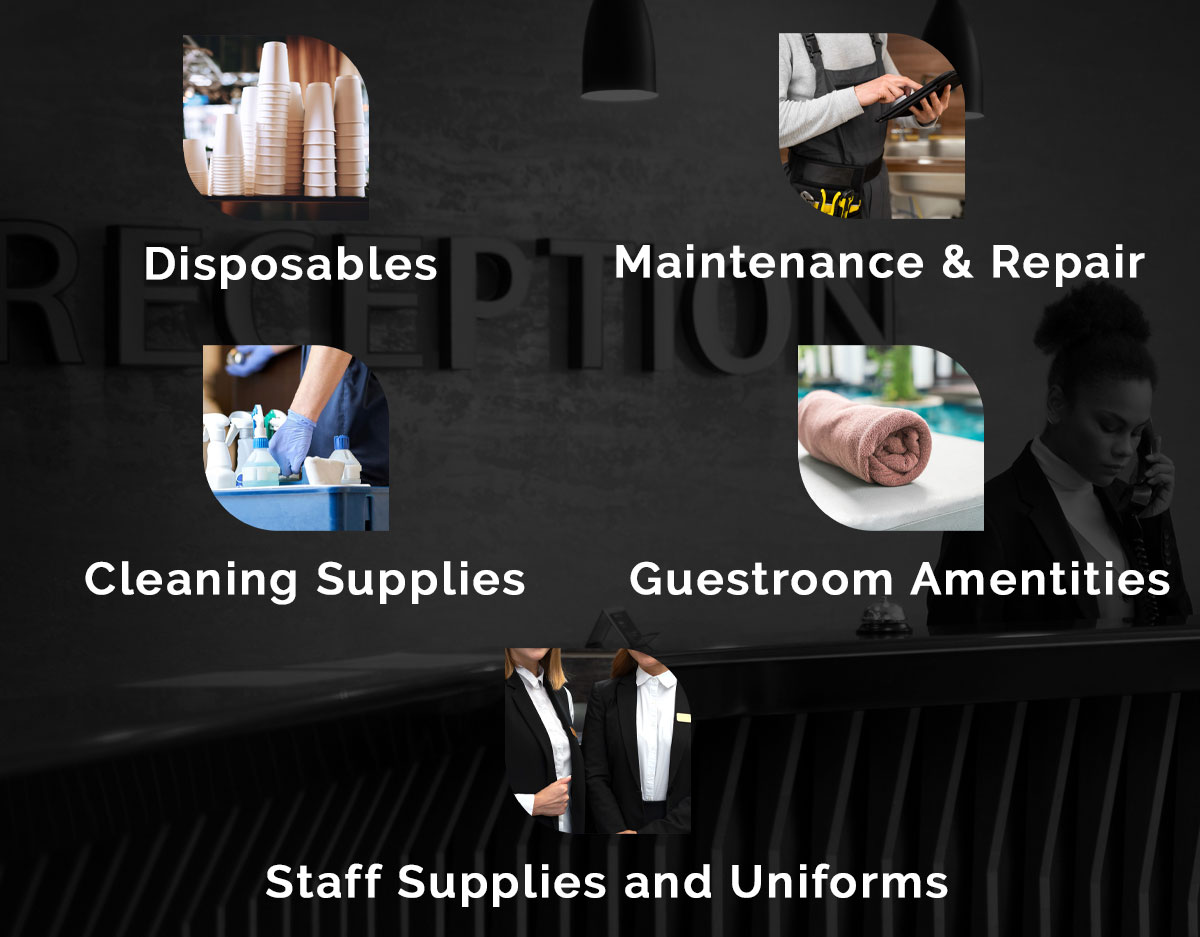
All hotels require the following OS&E:

  • Disposables: gloves, trash liners, tissue, and toilet paper.
  • Cleaning Supplies: brooms, mops, dustpans, wiping cloths, dusters, and chemicals.
  • Maintenance & Repair Operations: light bulbs, batteries, paint, and equipment repair parts.
  • Guestroom Amenities: soaps, shampoos, sheets, towels, hairdryers, irons, and hangers.
  • Staff Supplies: Uniforms.

Full-Service Hotels—those with restaurants and bars—require additional OS&E such as pots, pans, spatulas, squeeze bottles, food containers, cutting boards, dinnerware, flatware, glassware, and shakers.

Needless to say, the extensive amount of various operating supplies and equipment required for the many different departments in a hotel can, if not controlled, play havoc with one’s budget.

Explore Our OS&E Savings Programs

Source1 OS&E Product Brochure

OS&E Best Practices

Efficiently managing Operating Supplies and Equipment (OS&E) is a cornerstone of successful hotel operations.

From providing essential guest amenities to ensuring smooth daily functioning, hotel OS&E plays a pivotal role in guest satisfaction and overall efficiency.

With these three best practices, hotel operators can elevate their guest experiences and streamline their operations, setting the stage for every guest’s thriving and memorable stay.

Procurement

OS&E Procurement

Hotel OS&E procurement is the process of sourcing and acquiring the necessary operating supplies and equipment required for a hotel’s day-to-day operations.

Procurement is a best practice for hotel OS&E because it ensures the timely and efficient acquisition of essential operating supplies and equipment.

Effective procurement processes help hotels secure high-quality items at competitive prices, leading to cost savings and improved financial management.

All in all, a well-organized procurement strategy ensures the availability of high-quality OS&E items at competitive prices, contributing to guest satisfaction, efficient operations, and cost-effective management.

Cost Control

Cost Control for OS&E

Cost control is a best practice for hotel OS&E because it helps hotels optimize their expenses and financial resources.

By effectively managing operating supplies and equipment costs, hotels can achieve better profit margins and allocate resources to other critical areas of the business, such as guest experiences and staff training.

Cost control also allows hotels to maintain competitive pricing without compromising the quality of guest amenities, enhancing guest satisfaction and loyalty in the long run.

Quality Assurance

Quality Assurance and Regular Maintenance

Ensuring the quality and proper maintenance of OS&E items is crucial for guest satisfaction and operational efficiency.

Regular inspections and maintenance checks help identify any wear and tear, damages, or malfunctions in equipment and supplies. Prompt repairs or replacements are made when necessary, preventing guest inconveniences and potential safety issues.

Moreover, maintaining high standards for OS&E items contributes to a positive guest experience and reflects the hotel’s commitment to excellence.

By implementing a robust quality assurance and maintenance program, hotels can extend the lifespan of their OS&E, reduce long-term costs, and provide a consistently high level of service to guests.

Join Source1 Today

Embracing these practices allows hotels to deliver exceptional guest experiences and achieve operational excellence while maintaining a competitive edge in the ever-evolving hospitality industry.

What began with a promise of substantial cost savings from our buying group model has evolved into a solid bond of trust with our network of suppliers.

Source1 offers a “one-stop shop” experience for you to secure OS&E and FF&E whilst handling all of the other tasks that come along with operating a hotel.

A GPO like Source1 becomes a partner in your business and is dedicated to decreasing your costs while increasing your value.

Contact us today to learn more!

From Chaos to Control
Blog Posts

From Chaos to Control: Simplifying Hotel Contract Management with Technology

Hotel contract management technology is the use of specialized software and tools to streamline and automate the process of managing contracts in the hospitality industry.

It’s designed to help hotels and other lodging and entertainment facilities like yours efficiently handle various types of contracts, such as vendor agreements, service contracts, event contracts, and more.

Let’s walk through what hotel contract management is, and some key features and benefits of Source1s hotel contract management technology:

What Is Contract Management for Hotels?

What is Contract Management for Hotels?

Contract management for hotels involves the systematic administration, organization, and oversight of contracts established with various stakeholders such as suppliers, vendors, service providers, and event organizers.

It encompasses activities such as contract creation, negotiation, execution, monitoring, and renewal. Effective contract management in hotels ensures compliance with contractual obligations, facilitates cost control, mitigates risks, improves vendor relationships, and optimizes operational efficiency.

It involves maintaining accurate contract records, tracking key dates and milestones, and fostering clear communication and collaboration between parties involved in the contract.

Why Is Contract Management Important for Hotels?

Why is Contract Management Important for Hotels?

Contract management is crucial for hotels due to several reasons.

  1. Ensures legal compliance by helping hotels adhere to contractual obligations and regulatory requirements.
  2. Enables cost control and optimization by monitoring pricing, identifying cost-saving opportunities, and managing budgets effectively.
  3. Contract management mitigates risks associated with vendor relationships, service disruptions, and data breaches. It also fosters clear communication and accountability, enhancing vendor relationships.
  4. Contract management streamlines administrative tasks, improves operational efficiency, and provides valuable insights for performance tracking and improvement.

 Centralized Contract Repository

Centralized Contract Repository

Source1 provides a centralized platform for hotel operators to store and manage all their contracts in one place.

This eliminates the need for physical file cabinets or scattered digital files, making it easier to locate and access contracts when needed.

 Contract Lifecycle Management

Contract Lifecycle Management

Source1 technology offers features to manage the entire contract lifecycle.

This means you can create, review, negotiate, and execute contracts within our contract management software, ensuring that all stages of the contract process are efficiently managed and tracked.

Automated Workflows

Automated Workflows

Hotel contract management technology helps streamline the contract lifecycle by automating various workflows.

It can automate tasks such as contract approval, renewal reminders, and notifications for key dates or milestones.

This helps you stay on top of contract obligations and deadlines. It also reduces manual effort, minimizes errors, and ensures timely execution of contracts.

Streamlined Vendor Management

Streamlined Vendor Management

Source1 technology allows hotel operators to maintain a comprehensive vendor database within the vendor management software.

This enables effective vendor management, including tracking vendor performance, maintaining contact information, and accessing vendor contracts and agreements.

Contract Search and Reporting

Contract Seach and Reporting

Source1 technology includes robust search and reporting capabilities, so hotel operators can quickly search for specific contract terms, clauses, or vendor details.

The technology also provides reporting and analytics capabilities. This offers insights into contract performance, key metrics, and compliance levels.

This streamlines the process of retrieving contract information and compliance monitoring. It also helps you evaluate vendor performance, identifies opportunities for cost savings, and supports you in making data-driven decisions.

Risk Mitigation and Compliance

Risk Mitigation and Compliance

Contract management technology such as Source1 helps hotels mitigate risks associated with contracts by ensuring compliance with legal and regulatory requirements.

We offer transparency and visibility into your contract details and help monitor contract terms, obligations, and deadlines, reducing the chances of penalties, disputes, or missed opportunities.

This reduces the risk of contractual breaches, penalties, or missed opportunities.

Cost and Time Savings

Cost and Time Savings

By automating contract management processes, hotels can significantly reduce the time and effort required to handle contracts manually.

This frees up staff to focus on other critical tasks and improves overall operational efficiency.

Moreover, it helps identify cost-saving opportunities. This includes renegotiating vendor contracts or eliminating underperforming agreements.

From Chaos to Control

As mentioned above, hotel contract management technology offers a comprehensive solution for the efficient management of contracts in the hospitality industry.

Source1 technology simplifies hotel contract management by providing a centralized platform, automating contract lifecycle processes, improving contract visibility, enhancing vendor management, supporting compliance monitoring, and enabling cost control.

By leveraging this technology, hotel operators like you can streamline operations, improve productivity, reduce administrative burdens, and optimize contract management practices.

Join Source1 today to take control of your contract management chaos!

Data and Technology
Blog PostsTech

How Data and Technology is Reshaping the Hotel Industry

Your hotel purchasing data plays a vital role in helping you succeed in the hospitality world. The use of this data and technology can help improve operations, better understand your guests, and increase revenue.

Here are some ways data and technology are reshaping the hotel industry and how your hotel operation can make use of it:

Increased Efficiency

Leveraging technology can automate many tasks, such as inventory management, supply chain management, and contract management, which can save time and reduce errors.

Through the collection and analysis of data, you can also improve operational insights on guest behavior and hotel performance. This helps you gain a complete understanding of what may currently be working, and what you may need to work on.

With the help of technology, you can complete tasks in half the time!

Improved Decision Making

Your data can provide valuable insights into spend management, price trends, and other key metrics, which can help you make more informed decisions.

The power of data and technology can tell you where to invest your time and money. You’ll make smarter business decisions that will help benefit both your staff and your guests.

This also gives you the greater ability to compete with larger hotel chains through access to similar technologies.

Boosted Revenue

Through the use of data and technology, you can identify areas of opportunity and optimize pricing strategies.

By automating certain tasks, you can reduce labor costs, and potentially reduce costs associated with overbooking, missed reservations, and other issues.

You can also use marketing strategies that will lead to increased revenue. Optimizing the use of technology to better engage with customers and drive bookings will lead to higher occupancy rates.

Enhanced Customer Satisfaction

Understanding your purchasing data gives you the ability to personalize experiences and offer targeted promotions. Give your guests a reason to choose your operation over your competitors’ next time.

The combination of your hotel data and technology, you can effectively accommodate your guests needs and work more efficiently. Mobile check-in and room automation are hassle-free services that can help enhance the guest experience and customer satisfaction.

You can easily communicate with your guests with the help of technology. Through email automation, SMS messaging, and other notifications to guests, you can improve communication and increase guest loyalty.

Join Source1 Today!

Whether you’re looking to increase efficiency or boost revenue, leveraging your hotel data and technology can help reshape every area of your hotel operation.

Join Source1 today to make use of your hotel data and technology!


Hotel Inventory Mgmt Technology
Blog PostsTech

Benefits of Hotel Inventory Management Technology

While managing inventory is a critical aspect of your day to day, doing it correctly and efficiently can help cut down on time and even save your hotel operation thousands of dollars each month.

Technology can help you tackle different pain points and challenges you may been facing when it comes to managing your hotel inventory.

Let’s look at the benefits of utilizing Hotel Inventory Management Technology:

Save Time

Wouldn’t it be great if you could clone yourself to do double the work in half the time? Although you can’t literally do that, you can come close to it – with technology! Counting inventory by hand is so old school. Nobody has time for that these days, especially in the midst of labor shortages.

Streamline your inventory process with Source1 technology. Say hello to more accurate forecasting. Receive alerts when your stocks are low so that you don’t have to spend time counting items you may need – effective ordering at its finest!

You can count on inventory management technology to quickly tell you how much of each ingredient you need so you can make quick reordering decisions and increase productivity.

Save Money

Along with saving time, hotel inventory management technology can also help you identify new savings opportunities. These two go hand in hand.

By utilizing hotel inventory management technology, you can reduce waste and labor – no more paying your staff overtime to stay and count each item. Everything you need will be easily accessible right through your smartphone or desktop.

Say goodbye to printing out hundreds of papers and going through boxes of pens and say hello to more accurate forecasting.

You have access to seeing what items you’re using up quickly so that you know when and how much of everything you should be ordering. Your stock levels are updated in real-time so you can avoid over-ordering or under-ordering.

This will also help you plan out how frequently your orders should come in. Your chefs can even adjust your recipes costs in real-time to ensure you’re increasing profits!

Join Source1

Source1 is here to make your inventory process smooth sailing and easy to navigate. Whether you’re looking to save time and money or just interested in ultimately making your hotel operation more tech-friendly, join Source1 today!


12