









Why Hospitality Purchasing Needs More Visibility to Drive Real Savings
In hospitality, margins are tight, expectations are high, and every purchasing decision carries weight. Yet many hospitality procurement teams are still operating with limited hospitality purchasing visibility into the very factors that determine success: pricing accuracy, distributor performance, contract compliance, commodity trends, and true buying power.
Hospitality procurement is no longer just about placing orders and negotiating contracts once a year. It’s about having ongoing insight into where money is being spent, why costs fluctuate, and how procurement decisions impact operations across food, supplies, and services. Without that visibility, even well-run hospitality organizations can leave significant savings on the table.
The Visibility Gap in Hospitality Procurement
Procurement teams in hotels, resorts, casinos, and hospitality groups manage an enormous range of spend categories. Food and beverage. Disposables. Linens. Cleaning chemicals. Maintenance supplies. Equipment. Services. The list goes on.
The problem is that these categories are often bought from different distributors in different places, and the contracts are hard to keep track of. Prices may seem right on paper, but over time, savings can slowly disappear because of invoice mistakes, contract leaks, and distributors not following through.
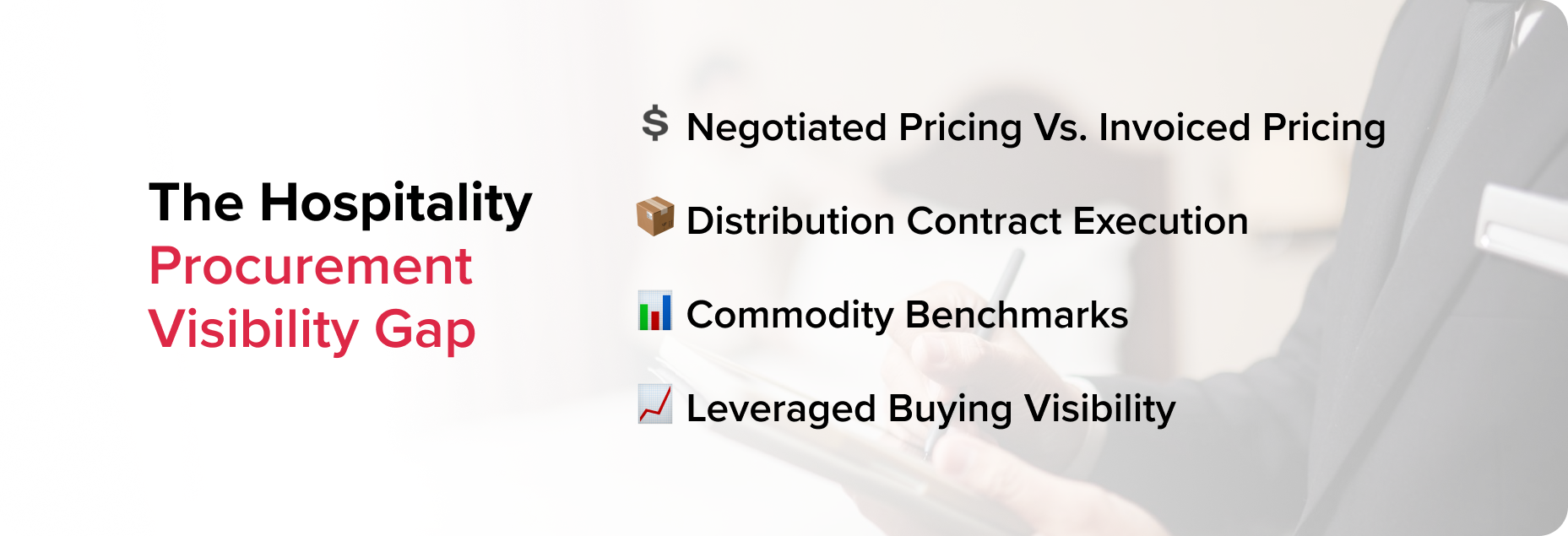
Hospitality procurement departments often don’t have:
- A clear way to see the difference between negotiated pricing and invoiced pricing.
- A look at how distribution contracts are being carried out on a daily basis
- Access to commodity benchmarks to check how the market is moving
- Data to find out if all leveraged buying opportunities are being used
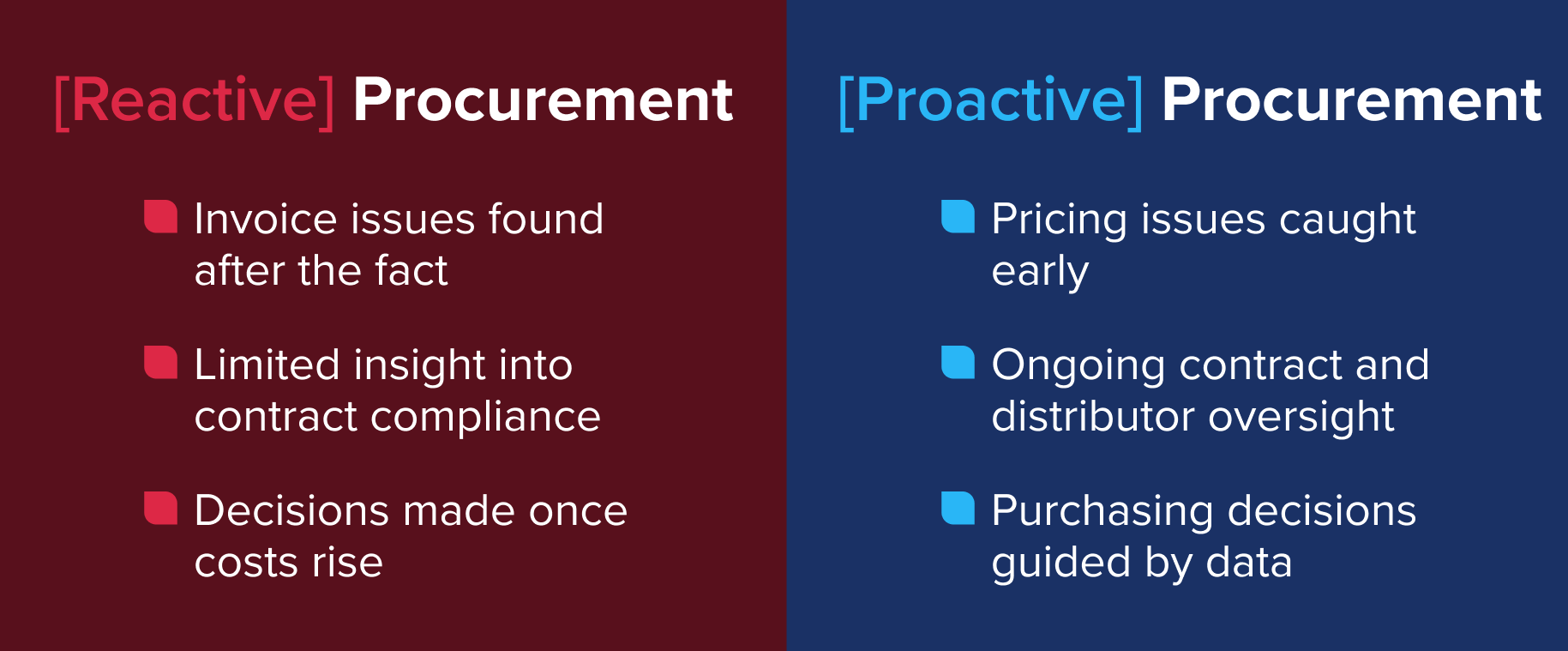
When procurement teams can’t get this information in real time, they have to react to it instead of making decisions. Instead of controlling spending ahead of time, problems are dealt with after costs have already gone up.
Why Hospitality Procurement Requires a Broader Strategy
Buying things for the hospitality industry is especially hard. Unlike restaurants or stores that are only in one place, hospitality businesses often have to deal with a wide range of ideas, service models, and operational needs all at once.
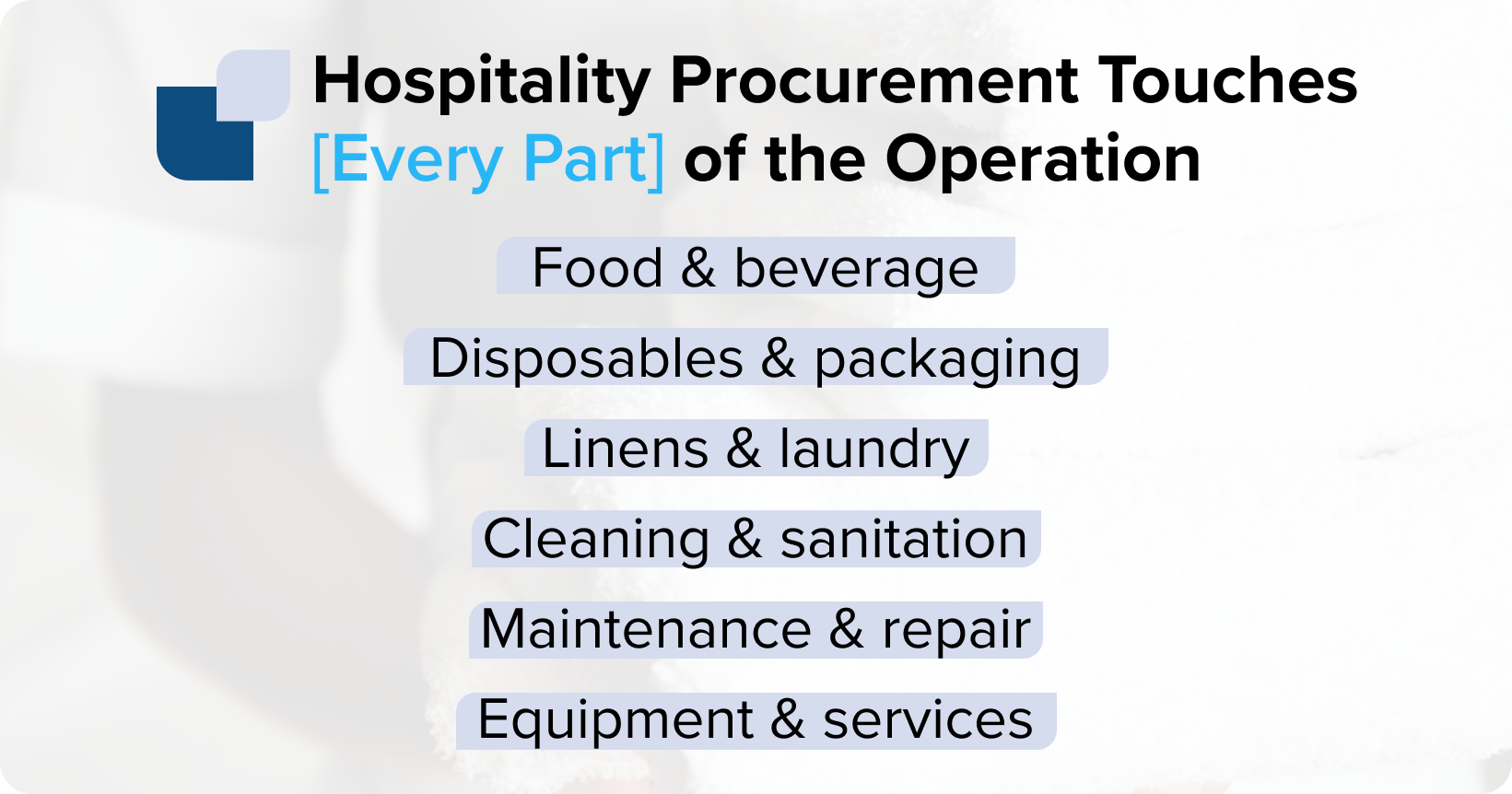
For example, a high-end hotel might have:
- A lot of places to get food and drinks
- Catering and banquet services
- Amenities in guest rooms
- Cleaning and laundry services
- Needs for facilities and upkeep
Each area has its own ways of buying things and working with suppliers. If you handle these things separately, you might end up with broken buying patterns, missed contract opportunities, and prices that aren’t the same at all locations.
A good hospitality procurement strategy links these groups through a single, data-driven method. That means knowing how much you spend, combining purchases when you can, and making sure that the savings you negotiated actually make a difference in the bottom line.
The Role of Hospitality Purchasing Visibility in Cost Control
Hospitality purchasing visibility gives operators a clear view of pricing, contracts, and buying behavior across food, supplies, and services. When procurement teams can easily see prices, contract terms, and how people buy things in different categories, they can control costs instead of chasing them.
With purchasing visibility, hospitality operators can:
- Find pricing differences and fix them right away
- Make sure that your distribution partners are following the terms of the contracts you made with them.
- Keep an eye on commodity trends and make plans for how to buy them.
- Look at how well suppliers do in different places and regions.
- Find ways to use volume and combine spending to your advantage.
If you don’t have this level of information, buying things becomes a guessing game. With it, hospitality teams can make smart choices that help them run their businesses more efficiently and make more money.
How Source1 Supports Smarter Hospitality Procurement
Source1 helps hospitality teams improve hospitality purchasing visibility by connecting pricing, supplier performance, and spend data across categories. Source1 helps operators figure out where they are spending and where they can save by giving them access to a wide range of suppliers, data transparency, and purchasing knowledge.
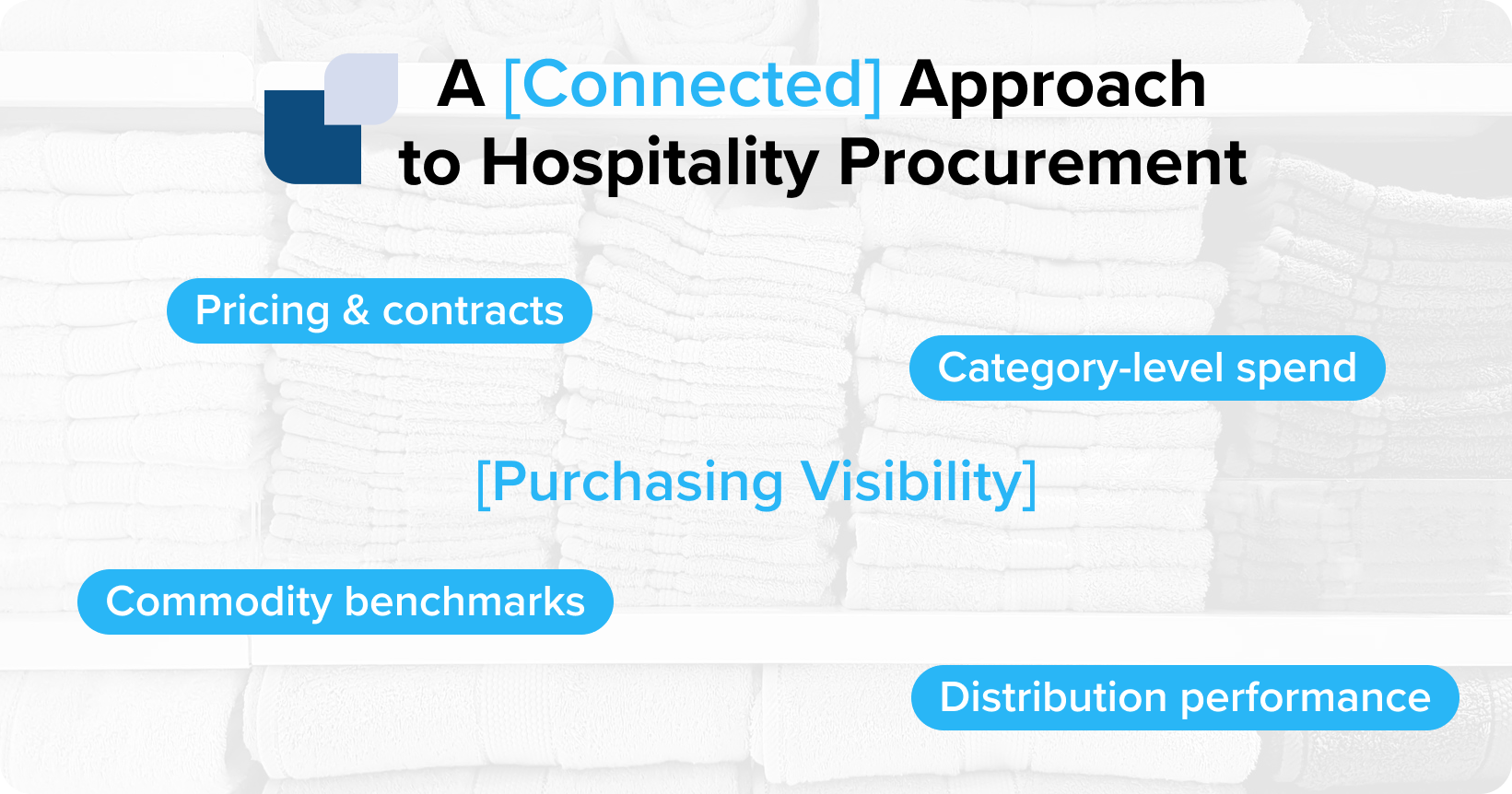
As a Source1 member, your hospitality procurement team gains visibility into:
- Contracted pricing across food, supplies, and services
- Distribution performance and compliance
- Category-level spend trends and savings opportunities
- Commodity benchmarks that support smarter buying decisions
This insight allows procurement teams to move beyond transactional purchasing and focus on strategic cost management.
Thousands of Ways to Save Across Hospitality Spend Categories
Hospitality procurement rarely sits in one neat bucket. Food and beverage usually gets the most attention, but it’s only part of the spend picture. Disposables, linens, cleaning programs, maintenance supplies, equipment, and service contracts all quietly add up in the background.
Source1 is built for that reality. Instead of managing each category in isolation, operators can view purchasing as one connected strategy. That makes it easier to spot overlap, reduce unnecessary complexity, and take advantage of buying power that already exists across the organization. The savings don’t come from one big change. They show up in the day-to-day purchasing decisions happening across departments and locations.
Leveraged Buying Without Losing Flexibility
One of the biggest mistakes people make when buying things for hotels is thinking that leveraged buying means giving up flexibility. The right procurement strategy gives you structure without taking away your ability to make choices about how to run your business.
Source1 helps hospitality teams use their collective buying power while still being able to meet brand standards, guest expectations, and regional preferences. When it makes sense, procurement teams can standardize things, but they can also make changes when they need to.
In the hospitality industry, where cost control is just as important as consistency and experience, this balance is very important.
Turning Your Hospitality Procurement Data Into Action
Data alone doesn’t improve hospitality procurement. Action does.
With the right visibility tools and expert support, procurement teams can turn purchasing data into meaningful outcomes. That includes renegotiating contracts, adjusting distribution strategies, identifying alternative suppliers, and reinforcing compliance at the location level.
The result is a procurement operation that works proactively instead of reactively. With stronger hospitality purchasing visibility, teams can move from reactive fixes to proactive cost control. Costs are controlled. Variability is reduced. Savings are measurable and repeatable.
The Bottom Line for Hospitality Procurement Teams
Hospitality procurement is no longer a back-office function. It is a strategic driver of profitability and operational success.
When procurement teams have strong hospitality purchasing visibility into pricing, contracts, and purchasing behavior, they can protect margins, support operations, and deliver measurable value across the organization. Instead of relying on assumptions or delayed reporting, teams gain clarity into where money is being spent, where costs are drifting, and where opportunities exist to improve performance.
Without hospitality purchasing visibility, even the best-negotiated contracts can fail to deliver their full potential. Pricing errors go unnoticed, compliance slips, and savings quietly erode over time. With it, procurement becomes proactive, consistent, and aligned with both financial and operational goals.
Click here to learn how Source1 helps hospitality procurement teams see the full picture and unlock thousands of opportunities to save across food, supplies, and services. Because in hospitality, the difference between good procurement and great procurement is visibility.